Please help support Capital Area Food Bank by making a donation through our neighborhood virtual food drive page. Last year, we set and reached the goal of $2021, so this year we’re aiming for $2022. Can you help us reach this amount? Thank you for any contribution, small or large, that you can make!
Note: there will also be a bin for donations of nonperishable food items at the Community Tree Lighting, which will take place at 4:45pm Sunday, December 12, 2021 (triangle at intersection of Luzerne Ave and Glen Ross Rd)
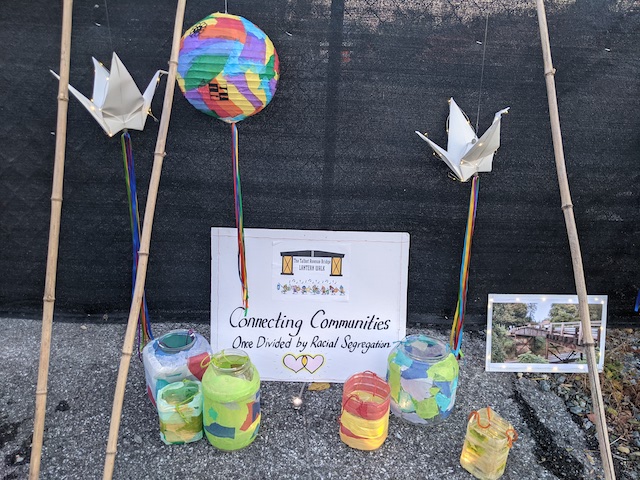
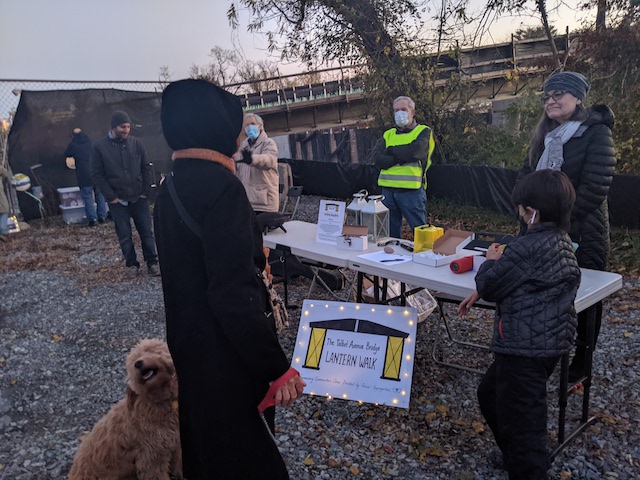
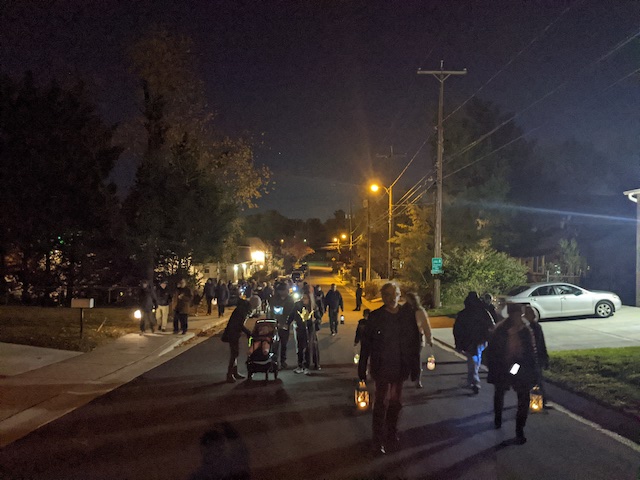
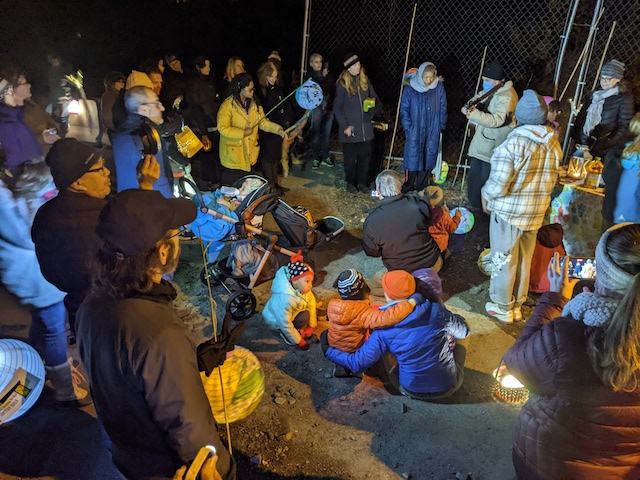
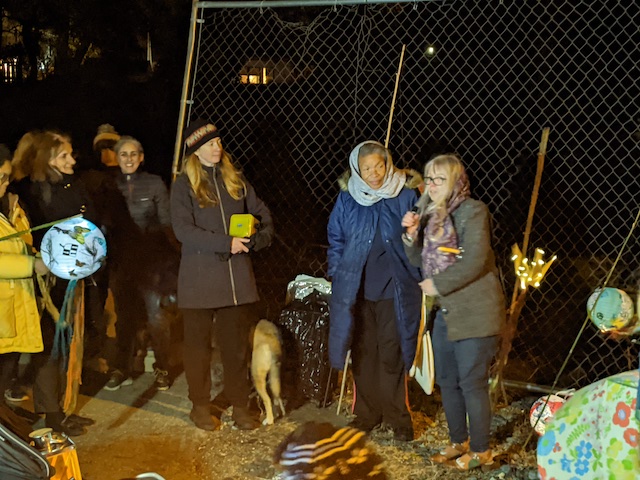
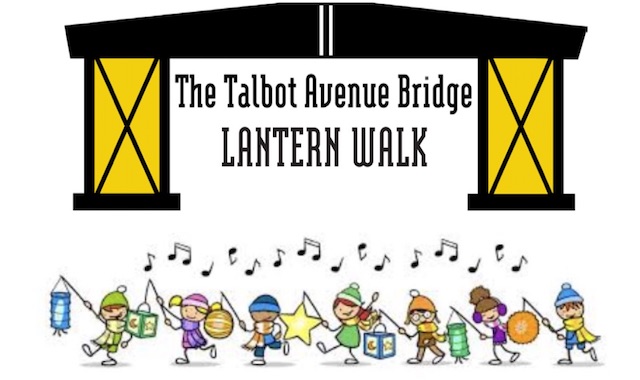
Begun in 2018, the Talbot Avenue Bridge Lantern Walk is an annual local community event that weaves together neighborhoods once divided by racial segregation. All are welcome! Come join us in shining our lights in the darkness, promoting unity over division, remembering the past and taking steps toward a brighter future…
WHEN:Saturday, November 13, 2021 Gather at 5:15pm, Lantern Walk will commence at 5:30pm
WHERE:4th Avenue and Hanover Street (North Woodside) to Talbot Avenue and Lanier Road (Lyttonsville), via Brookville Road See below for three different ways to participate View route
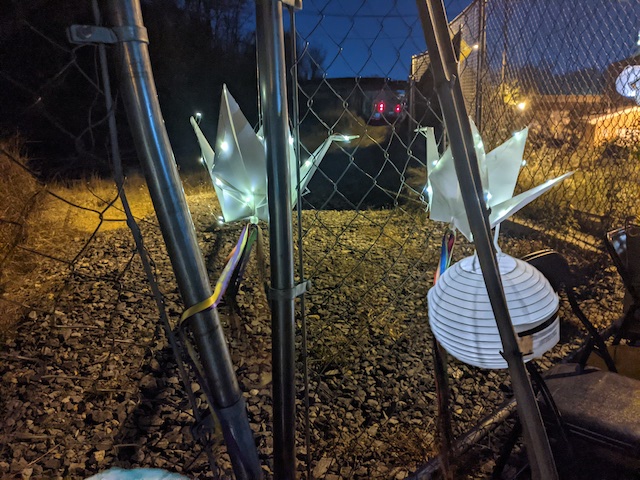
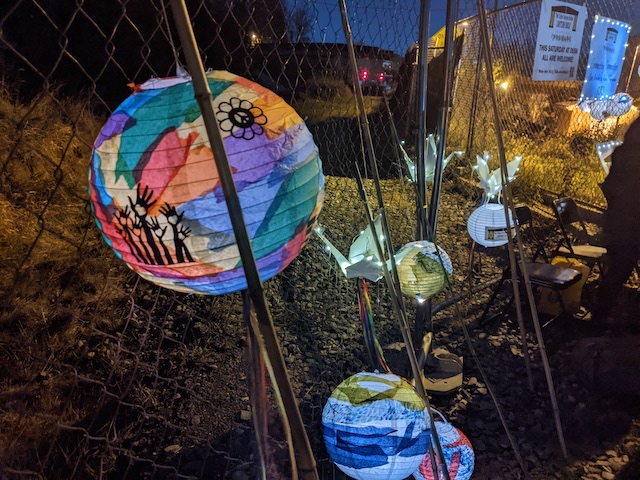
BRING: Warm clothing, a lantern, and a bell to ring, if you have one Any type of lantern will do, from a tea light candle in a glass jar to something more elaborate, either handmade or store-bought. You can find many ideas online. If you have the time and energy, you are encouraged to get creative! Extra lanterns and tea light candles will be available for anyone who needs them.
For more information, any event updates, and to RSVP for this event visit: bit.ly/TABLanternWalk
Questions? Contact the Talbot Avenue Bridge Committee (consisting of Lyttonsville, North Woodside, and Rosemary Hills residents): talbotavenuebridgecommittee@gmail.com
WAYS TO PARTICIPATE
1) Join for the whole lantern walk. As the route is again not a loop, as in previous years, this means that North Woodside residents will need to walk back or have someone pick them up in Lyttonsville.
2) Join for a portion of the lantern walk. For example, some North Woodside residents could join for the portion that goes through the neighborhood (e.g. 4th Ave -> Warren St/A Wider Circle)
3) Watch the lantern walk pass by. Neighbors who live along the route can come out of their homes to watch, wave, and hold a candle or lantern of their own in solidarity. Neighbors who live elsewhere can come stand along the lantern walk route and do the same.
Safety Precautions: Any young children who participate should be closely supervised by adults. And all participants are encouraged to RSVP ahead of time, so we have a good sense of expected numbers and can adjust safety precautions accordingly.
Video of the inaugural Talbot Avenue Bridge Lantern Walk (2018):
North Woodside now has a gardening interest group! You might ask, why create a group now, months before the next growing season? Well, I say why not? In the midst of winter, why not get our imaginations and our green thumbs itching to grow prize-winning tomatoes! Or find out why a particular crop (e.g., my potatoes) had a low yield last year? The North Woodside Gardening group exists so that all gardeners (novice and experts) can learn, share ideas, get advice, and (most importantly) grow relationships within the community.
Who can join? Anyone on the NWCA listserv who is interested in gardening is welcome! Our gardens appear as various types, planted in the ground or in pots or planters. Some may grow plants for fundraising, as a hobby, or for food. Some might be interested in the naturalistic approach by planting native flora and herbs to attract butterflies and birds. If this sounds like something you are interested in, please go to the NWCA subgroup and follow directions to subscribe.
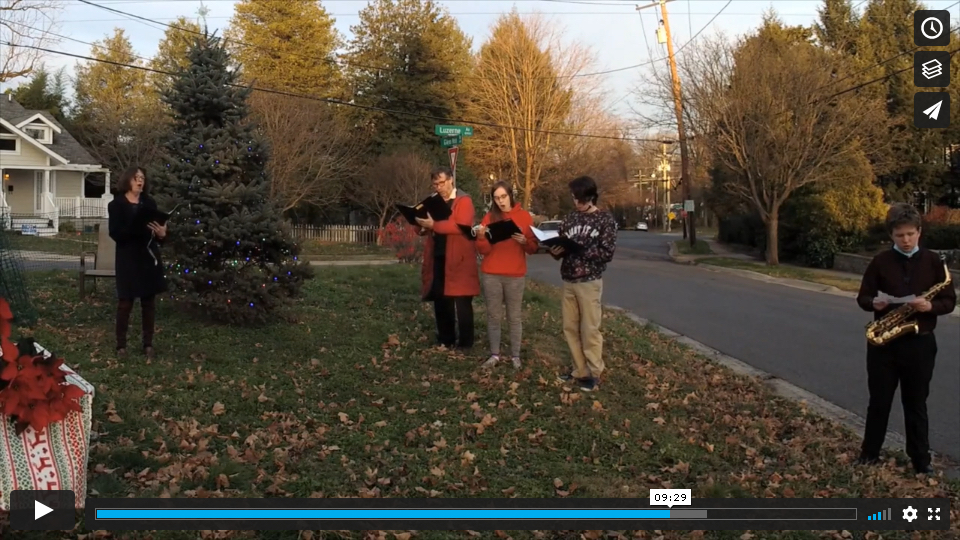
Singing following the lighting of North Woodside’s Community Tree on December 13, 2020
This year’s Tree Lighting program, organized by Holiday Committee Co-Chair Julie Lees, opened with an alto sax version of Let It Snow, followed by a small group of physically distanced singers blending their voices together for Dona Nobis Pacem (Give Us Peace).
After a few words of welcome by NWCA President David Cox, the Community Tree was lit and O Christmas Tree sung. Then it was time for a certain white-bearded man’s arrival to the tune of Santa Claus Is Coming to Town. Neighborhood children came, by appointment, to greet Santa and pick up treats. The event was streamed live and can be viewed below.
Thanks to Snider’s for once again donating a box of oranges for Santa’s treat table.
The intersection road changes came to conclusion in record time due to reduced traffic during the last 10 months. A few items remain:
Montgomery County put in wrongly named street signs. On a walk through the intersection, neighborhood representatives and the county agreed on the correct signage, which should be installed in the next few months. Thanks to Gus Bauman for his help on getting the county to focus on this mistake.
The Linden Civic Association and the NWCA worked together to obtain a sidewalk behind Sniders on the south side of Seminary Place. That sidewalk should also be installed in the next few months.
NWCA is following up on county plans for maintaining the new plants and trees placed around the intersection. Phyllida Paterson of our Tree Committee will be working on this.
Montgomery County arborists are partnering with local nonprofit Casey Trees to offer us expedited planting of free street trees in spring 2021. New street trees are planted in the right-of-way at least 25 feet from existing street trees and 10 feet from driveways. If Pepco distribution lines stretch overhead, trees must be “minor,” or small; otherwise they must be “major,” or shade trees.
Homeowners eligible for new trees may choose a first and second choice of species from a fairly broad list, which includes native species and a range of heights within the tree categories.
Since last year, COVID-related budget constraints have limited the tree-planting budget. Usually the county hires contractors to plant our trees. However in 2020, county arborists began partnering with nonprofit Casey Trees, which planted 15 saplings in our neighborhood (four others are pending) at low cost to the government. This arrangement continues in spring 2021. Casey Trees has provided excellent service to NWCA residents who received their trees, and consistently works hard to increase tree canopy throughout the DC area. Please keep Casey Trees in mind if you are donating to environmental causes this year.
If you think you are eligible for one or more new street trees and want to participate in our group request, contact the Tree Committee as soon as possible. Quantities may be limited. If you have a dead or dying street tree, please call 311 to request removal, which will open space for a replacement in the future.
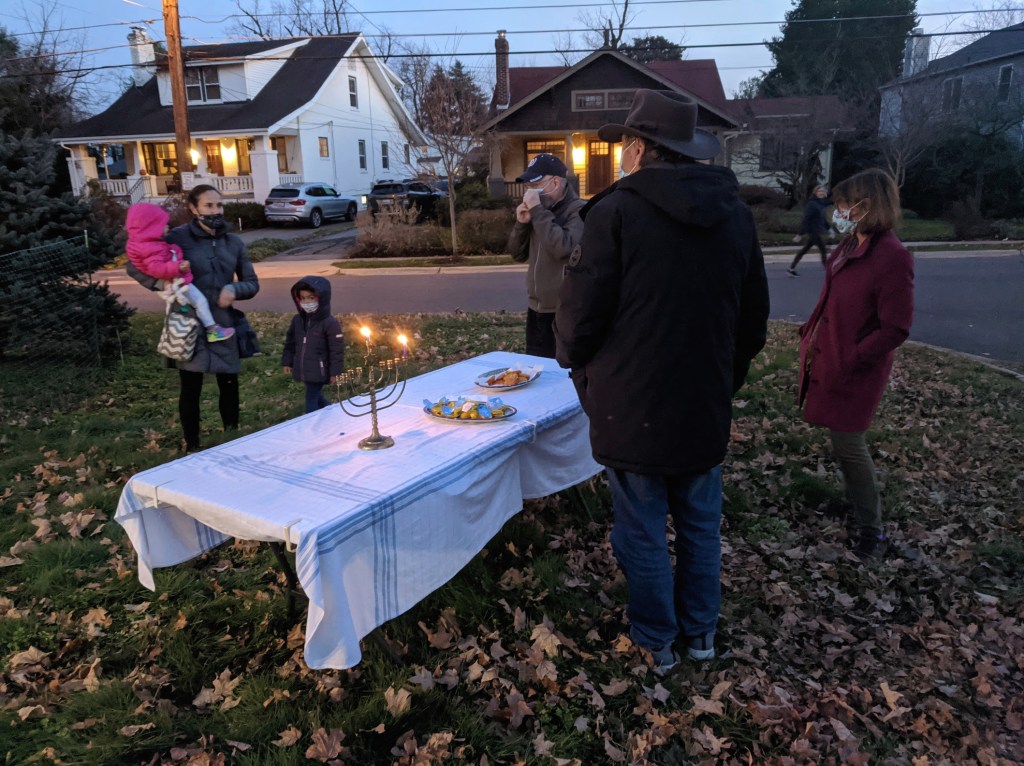
On December 10, 2020, Merrie Blocker, NWCA Vice President, led a traditional lighting for the first night of Hanukkah at the new outdoor menorah on the island where Glen Ross and Luzerne meet. Afterwards, neighbors came, by appointment, to pick up latkes (potato pancakes) and Hanukkah gelt (chocolate coins). The event was streamed live and can be viewed below.
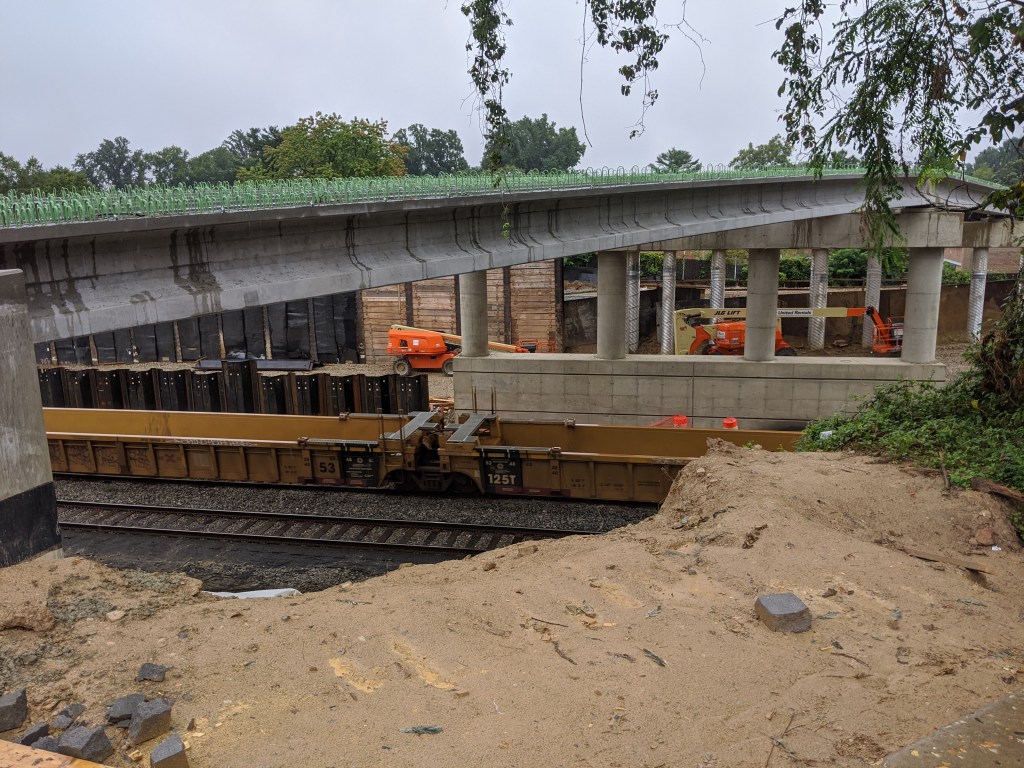
The new Talbot Avenue Bridge in September 2020, before construction halted.
Seminary Road Intersection
The bulk of the road construction work on this project will be completed in early November. Sometime within the next six months, trees and plants will be planted.
The portion of Seminary Road between Seminary Road and Seminary Place, which is now physically a continuation of 2nd Avenue, will be officially renamed 2nd Avenue.
The new traffic lights will be operational in early November and the county will then recalibrate the timing. Also, at that time the new streetlights will begin to work.
Talbot Avenue Bridge
As of Oct. 16, 2020, all construction stopped on the bridge. Due to the inconvenience and the eyesore of the partially built structure, Lyttonsville and Rosemary Hills neighborhood associations sent a letter to Gov. Hogan and other public officials requesting that Talbot Avenue Bridge construction be prioritized in Purple Line activities. After consultation with the members of the Traffic and Safety Committee, the NWCA Board sent a letter of support that also stated the following:
“As we foresee a greatly increased volume of traffic once the Talbot Bridge is opened, the North Woodside Association also wants to take this opportunity to remind Montgomery County, specifically the Montgomery County Department of Transportation, of its commitment, made to us last January and February in a public meeting and follow up emails, that once the Bridge is reopened the County will work with all three of our neighborhoods to mitigate any traffic disruptions.”
We believe that with the support of Lyttonsville and Rosemary Hills, we will obtain the traffic mitigations we’ll request in the future.
The approval of almost all types of mitigation requests is based on traffic-volume studies. So it would be wise to wait for the bridge to be open a few months and for the pandemic to have passed before requesting such a study.
2nd Avenue
Residents on 2nd Avenue have concerns about traffic speed and volume, particularly regarding pedestrian safety. The Traffic and Safety Committee will follow up with the county to request a review of all options for better traffic control and pedestrian protection.
— by Merrie Blocker and Julie Lees, Co-chairs, Traffic and Safety Committee
The COVID-19 pandemic is disproportionately hurting low-income and Black and brown families, whose adults are overrepresented among essential workers. Their children, especially the younger ones, are falling further behind academically.The new Educational Equity and Enrichment Hubs provide a safe opportunity for in-person support for MCPS K-5 students, based on financial need. Learn more here: www.equityhubs.org.




 Welcome to North Woodside