Steps in the Chain of Title Search Process (Montgomery County, MD)

By Kirsten L. Crase, PhD

The best place to begin your chain of title search is Montgomery County Atlas.

  1. Enter the property address in the box at the top: A map identifying your property within its neighborhood context will appear.
  2. Double-click within the boundary line of the property (zoom in first, if necessary), and a box showing basic property details will appear (owner, land use category, assessment date, year built, etc.).
  3. Click on Data Description at the top of the box for a brief description of each piece of data listed; of most importance are the liber and folio numbers. This set of numbers constitutes the first deed in your chain of title.

Your next stop is the Maryland Land Records Database. You’ll need to submit a request for an account before you can access the database. Once you have your account and the liber and folio number for your property’s current deed, you can begin searching. It’s always best to start with the current deed, even if you’ve identified previous deed information.

  1. Select your county (Montgomery) from the upper-left drop-down menu.
  2. On the search page that opens, search using the top box, titled “Jump to New Volume,” searching via liber and folio numbers.
  3. Skipping the Clerk box, enter your liber number in the Book box and your folio number in the Page box.
  4. The deed document that opens will be the current deed for your property, which should list the current owners as the grantees (buyers), along with the grantors (sellers). It will provide the date of the property transfer and a description of the property, often including the lot number, block number, subdivision name, and the location within Montgomery County Land Records of the document recording the original platting of the subdivision within which it is located. (For example, “…the west 50 feet in width of Lot No. 3, in Block No. 20 by the full depth of 150 feet, in the subdivision of land known as and called B.F. Leighton’s Addition to Woodside, as per plat recorded in Plat Book A, Plat No. 60.”)
  5. With this information, you can visit plats.net. Start by selecting Montgomery County in the drop-down menu, and when the Basic Search box appears, enter the plat book number and plat number in the appropriate boxes. You should see the name of the appropriate subdivision and a hyperlink to an MSA (Maryland State Archives) accession number. Click on this link, and you will be taken to the original platting record of the subdivision (usually a map of the subdivision) within which your property resides.

At this point you know the starting point (current deed) and ending point (subdivision platting) of your chain of title, but you must fill in all the deeds in-between. To do this, return to mdlandrec.net and begin working your way backward from the current deed.

In the current deed, somewhere below the property description, there may be a paragraph that notes the liber and folio number of the previous deed. If so, return to the search page and enter this information, and continue following this process until you reach a deed that does not list the previous deed’s information. Unfortunately, this may happen at almost any point in the chain of title search.

When this happens, return to the main Montgomery County Land Records Indices page.

If the oldest deed you locate is from 1977 or later, click on “Individual Search” or “Corporation Search” in the left-hand column. This is a straightforward search process that involves entering the name in question and the date parameters.

If the oldest deed you locate is from 1976 or earlier, click on “Active Indices” in the column on the left. Since the grantee name is the only name you know at this point (i.e., the grantor on the oldest deed you’ve located), click on “Land Records, Grantee Index, 1777–1976” in the drop-down menu. Then choose which block of dates you want to search within. Begin with the most recent block of possible dates for the deed you’re searching for; for example, if your earliest known deed is dated March 5, 1975, begin with the indices from 1973–1977. Under this block of dates, look for the first letter of the owner’s surname, or corporation name, and then the first letter of their given name. Once this page opens, click on the red hyperlink on the right — “How to Use Montgomery County Land Record Indices” — for an overview of the process used to continue your search from here. Once you find the next-oldest deed, the previous deed’s liber and folio numbers may be listed here, but if not, repeat the process of using the Active Indices search option (or Individual/Corporation search, if it’s still later than 1977) to continue to work backward. You’ll know you’ve reached the end of your chain of title when you locate the deed in which the name of the grantor is the individual or corporation that platted the subdivision in question.

How-To: Historic Newspaper Research

By Kirsten L. Case, PhD

The local “newspaper of record” for many decades.

The most user-friendly source of historic newspapers is the Library of Congress website “Chronicling America” (chroniclingamerica.loc.gov), which provides free access to a searchable network of digitized newspapers from across the country. The Advanced Search tab allows you to select a specific state, or the District of Columbia, to search within, and gives you multiple options for key word searches.

For Montgomery County, it is always a good idea to try each search in both Maryland and the District of Columbia. The “Evening Star” (Washington, D.C.) was considered the newspaper of record for many decades, and it is also a wonderful source of social news for the city and the surrounding counties. The “Montgomery County Sentinel” is another important local newspaper in the database.

Editor’s note: If you would like to be part of an organized approach to neighborhood history research — or if you come across any interesting information related to neighborhood history that you’d be willing to share with neighbors — contact the North Woodside History Group.

Digging into Neighborhood History

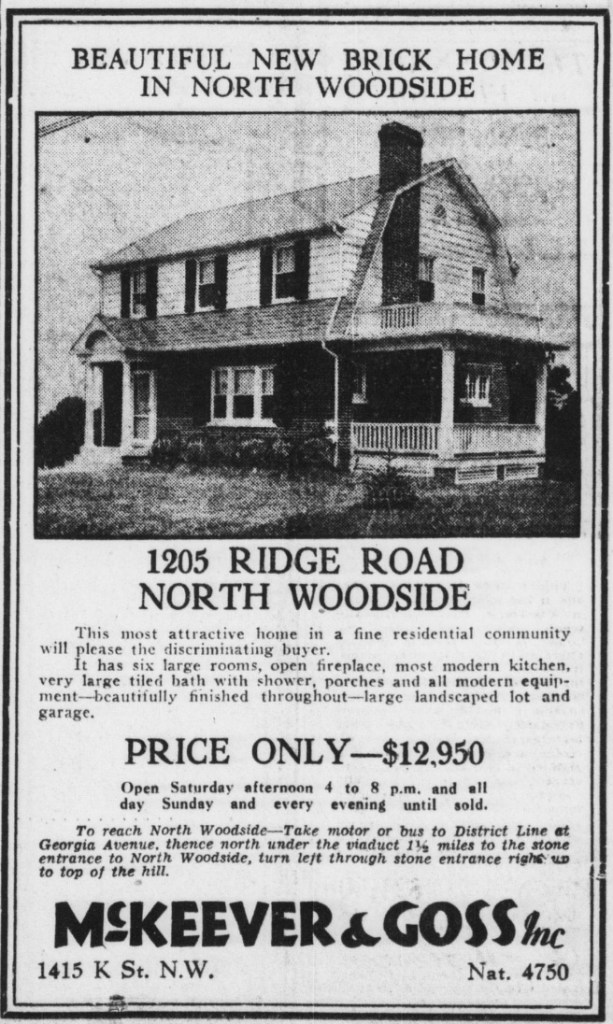
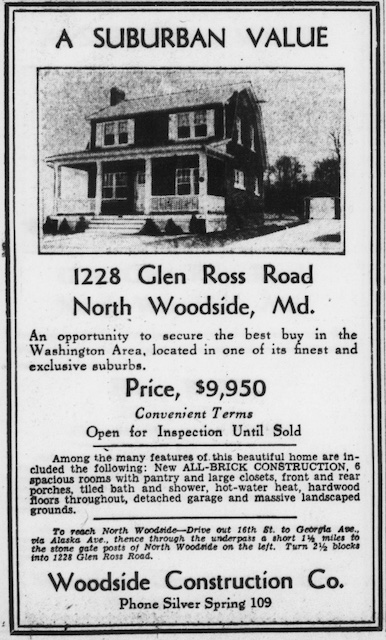
On February 16, 2022, many neighbors tuned into an online training by Kirsten L. Crase, PhD, University of Maryland, on how to research the history of their homes. The training inspired a search of historic newspaper digital archives for articles related to the neighborhood. Among many fascinating finds, neighbors uncovered a plethora of original advertisements for North Woodside homes. Can you find these homes today?

Source: Evening Star (Washington, D.C.), Chronicling America: Historic American Newspapers. Lib. of Congress. Dates/Pages (left to right): September 15, 1928, Page 23; August 21, 1936, Page 16; September 6, 1930, Page B2; April 25, 1931, Page B2.

Many of the old North Woodside advertisements, such as the large one above, tout the
“exclusive” nature of the community and “the protection of its sensible restrictions,” not-so-subtle allusions to racially restrictive deed covenants.

For more information on researching the history of your home:

And if you discover your home has a racist deed covenant:

Story of the Woodlin Wizard Weather Vane

By Phil Termini

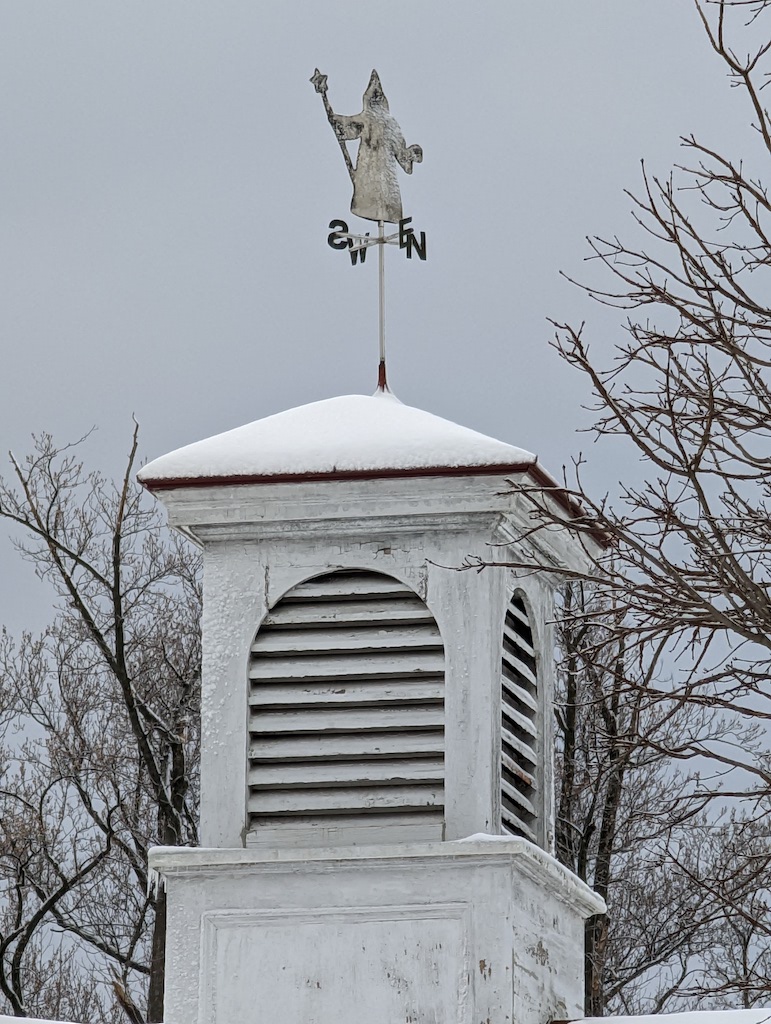
Skip back to end of the school year 2002. What happened to the Woodlin Wizards weather vane on the cupola atop our elementary school? It seems to have vanished! Bummer, “the pump don’t work cuz the vandals took the handle.”

My and my wife Patricia’s son Tony was finishing his last year there, and our two daughters attended there as well. So I got the notion to try to do something as a tribute for the school and the wonderful principal, Emily Kesser, like making a new weather vane to replace the one taken by the vandals. Having been around the block a few times in my youth, I had an idea. Signs went up around the area offering a no-questions-asked $100 cash reward for the weather vane’s return or its simply being put in our yard. Wishful thinking. No takers. These kids today don’t need any money. Too affluent a neighborhood, I suppose.

I learned that the Woodlin PTA was instrumental in getting the first Wizard weather vane made by a local metal artist, David Hubbard. I visited David and lo and behold, he still had the original full-size drawing of our Wizard. Piece of cake!! I got ahold of some stainless steel sheet metal and started cutting and welding. Metalwork is one of my hobbies—go-carts and minibikes and such. When I installed this new Wizard on top of the school—completely ignoring what the school maintenance staff said to me about going up on the roof (it’s my nature)—where it now lives, I got advice from metalworkers on how to install it in such a way as to make it just about impossible to steal again. One-way screws and a detent in the shaft did the security trick. I may have to go back up there to remove it for the rebuild if the contractors and construction personnel can’t handle it. What a fine old Wizard we have. I hope the new school has a spot planned for it.

Beacon Editor’s note: Woodlin Elementary School’s PTA President reports that the school’s cupola (including the weather vane) is to be incorporated into a “learning lawn” that will face Luzerne Ave.

Presentation on Historic Homes in Lyttonsville and North Woodside

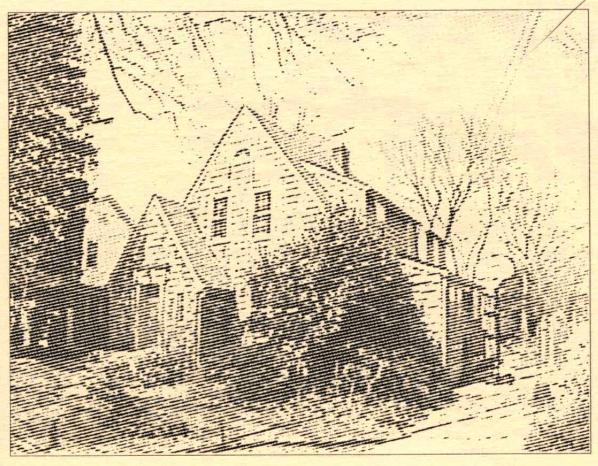
A historic home in North Woodside

Graduate students in the University of Maryland’s Historic Preservation program have spent the last semester researching the history of eleven houses in Lyttonsville and North Woodside (and one in Woodside).

You are cordially invited to attend the capstone presentation of this historic house and local community research project, which will take place on Wednesday, December 15th at 7 pm, at Woodlin Elementary School. The students will give brief presentations on the histories of each of the twelve houses in the larger context of the history of these communities, with an emphasis on the most useful historic resources for conducting house histories. This event is sponsored by the Talbot Avenue Bridge Committee.*

Location information:
Woodlin Elementary School (cafeteria/multi-purpose room)            
2101 Luzerne Avenue, Silver Spring, MD 20910            
Note: Use entrance at left side of building (next to school parking lot)

IMPORTANT SAFETY NOTE: Masks will be required, as well as proof of COVID-19 vaccination (or a negative COVID-19 test result taken within 72 hours of the event).

Questions?  Contact the Talbot Avenue Bridge Committee

* This activity is not sponsored by, associated with, or endorsed by Montgomery County Public Schools or Montgomery County Government.

Historical Maps of North Woodside

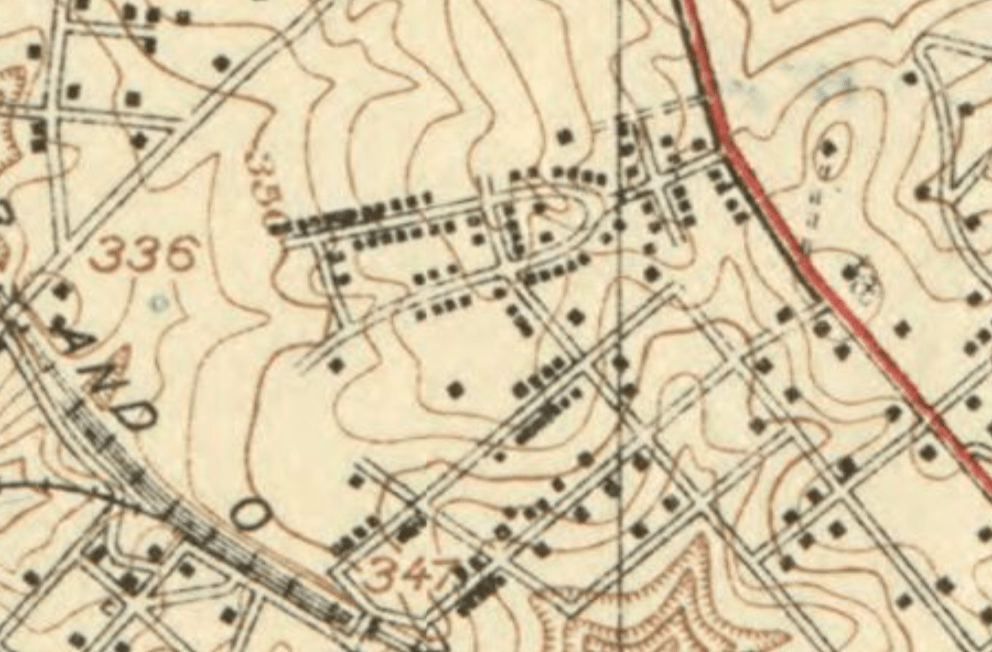
North Woodside in 1929. Source of Map: Library of Congress, Geography and Map Division.

Some links to a bunch of historical maps that show North Woodside in its younger days  (zoom in just above the northern tip of DC to where it says “Woodside”)

  • 1891 (year after our neighborhood was established)
  • 1893 (shows the neighborhood lies ~7.5 miles from White House)
  • 1917 (shows bridge that preceded the historic Talbot Avenue Bridge, built in 1918 and demolished in 2019) Note: if you live in one of the oldest houses in the neighborhood you should be able to find your house on this one.
  • 1918
  • 1924
  • 1929 (#1)
  • 1929 (#2) Note: many more neighbors should be able to find their houses on this one — particularly those living in bungalows and Sears Kit houses on Grace Church, Hanover, Glen Ross, Luzerne, and 2nd.

So interesting to imagine what this area looked like back then. Very little development and no Beltway yet!

Farewell Woodside Deli

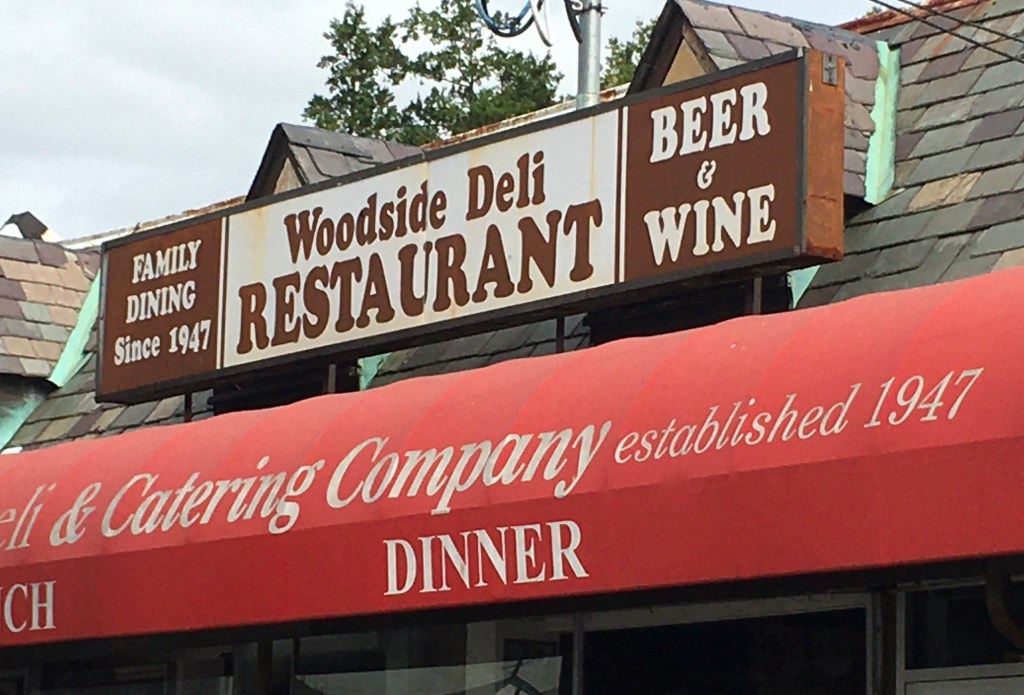
The original Woodside Deli on Georgia Ave—a much-loved neighborhood institution for 72 years—closed suddenly in early October due to a disagreement with the landlord on renewing the lease. Many neighbors expressed shock and sadness over the closing on the neighborhood email list. A Woodside Deli memory from a long-time neighborhood resident:

When I lost to Doug Duncan in the 1994 Democratic primary for County Executive, he was nervous about who I might support in the November general election. The Republican nominee was a smart, popular elected official (in those times, the County GOP was a real player—we had Republican Councilmembers and our Congresswoman was Republican) and Doug ran poorly in this area of the County.

So after the primary election we met at the Woodside Deli to discuss specific issues we differed on, the coming campaign, and my potential endorsement. The Woodside was a popular spot for politicians and reporters alike and remained so to its very unfortunate demise. Just yesterday (October 10), I got an e-mail from a prominent reporter saying, “ Oh no, now where can we meet and talk over breakfast?”

I shall miss the Woodside mightily.

— Gus Bauman

Farewell to a Historic Bridge

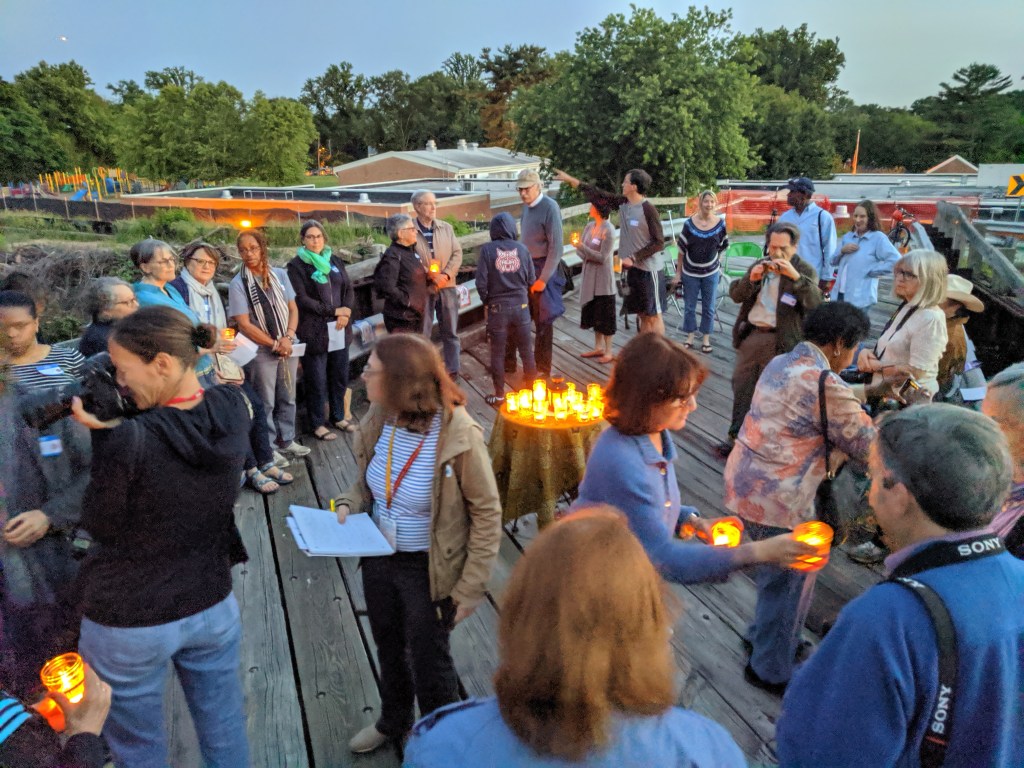
Talbot Avenue Bridge Candlelight Vigil, on eve of the century-old bridge’s final closure before demolition.

On June 4, 2019, the Purple Line Transit Constructors closed and began demolition of the historic wood and steel Talbot Avenue Bridge. Built in 1918 from an overturned train turntable from West Virginia, the century-old Bridge was the last remaining historically-significant structure of the historically African-American community of Lyttonsville, founded in 1853 by free man of color Samuel Lytton. Originally two-lane, the Bridge served as a lifeline to Lyttonsville residents through a significant portion of the 20th Century, when Silver Spring was very starkly racially segregated and ~50 neighborhoods in Silver Spring, including North Woodside, had racially restrictive deed covenants that prohibited African Americans from owning property or living in them, except as domestic servants. In recent years, current and former Lyttonsville residents have shared visceral memories of racial bigotry they experienced in North Woodside, and how they viewed efforts by North Woodside residents to permanently close the Bridge in the 1990s as racially-motivated.

A year ago, Lyttonsville, North Woodside, and Rosemary Hills neighbors came together to organize the Talbot Avenue Bridge Centennial Celebration at which NWCA President David Cox presented a unanimously-passed NWCA Board resolution acknowledging and strongly denouncing racial bigotry in all its forms, past and present. North Woodside is the first (and only so far) neighborhood in Montgomery County—and one of only a few in the U.S.—to publicly acknowledge and denounce racist deed covenants of the past. Read the resolution in full and view its presentation.

Over the past year, neighbors connected by the Bridge have continued to collaborate, organizing a number of Bridge-related social and educational community events. At sunset on the eve of the Bridge’s closing community members gathered on the Bridge one last time for a Candlelight Vigil to mark this transition and enjoy a final moment in the historic space.

On July 5, 2019, a small crowd gathered for the much anticipated lifting of the Bridge’s steel girders. The girders are currently being stored by the County, along with other saved parts, for eventual placement along the Capitol Crescent Trail in a new County park that will be created in Lyttonsville following Purple Line construction.

For photos, videos and more info about Talbot Avenue Bridge events this past year, go to the Talbot Avenue Bridge Centennial website (click on “Events”).

Thanks to all neighbors, too numerous to list, who have contributed in one way or another to Bridge-related events this past year!

For more information about the history Talbot Avenue Bridge and racial segregation in Silver Spring, watch Silver Spring: A Sundown Suburb in the Capital’s Gateway, a presentation by public historian David Rotenstein or check out his collection of writings on the the topic.

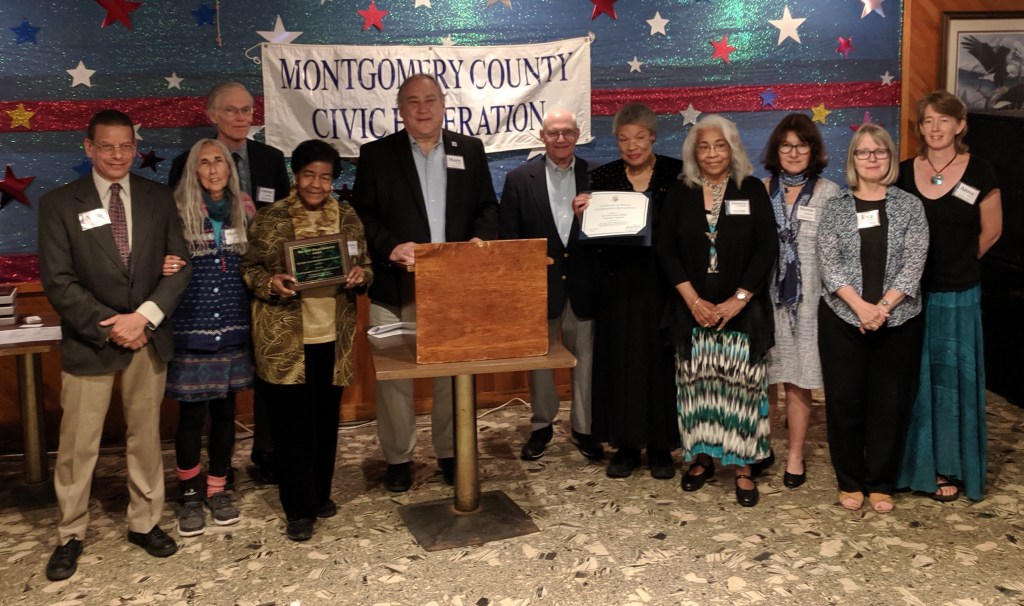
On June 13, 2019, County Executive Marc Elrich presented Montgomery County Civic Federation’s Wayne Goldstein Award to the Talbot Avenue Bridge Centennial Committee for their work for racial reconciliation and preservation of elements of this historic bridge to educate future generations about segregation in Montgomery County’s history: Alan Bowser, Marcie Stickle, George French, Charlotte Coffield*, Joel Teitelbaum†, Pat Tyson*, Elmoria Stewart*, Merrie Blocker‡, Eva Santorin†, Anna White‡. Not pictured: David Rotenstein, Laura Hussey. *Lifelong resident of Lyttonsville; †Rosemary Hills resident; ‡North Woodside resident