How the American Film Institute’s Silver Theatre Came to Be

By Wendy and Lisa, daughters of Gus Bauman (North Woodside)

On Friday afternoon, August 24, 1984, when most Montgomery County officials were away on vacation, a contract developer quietly commenced demolition of the 1938 Art Deco Silver Theatre prior to a scheduled public hearing about designating it as an historic site.
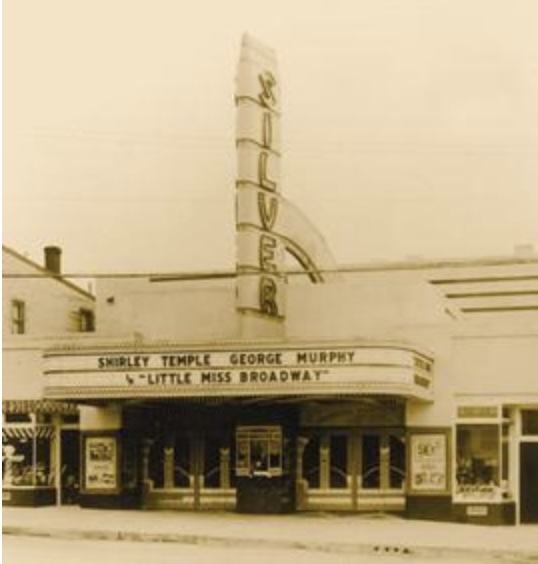
The Silver Theatre in 1938, shortly after opening. Black people were not welcome for its first couple of decades. Source: M-NCPPC Historic Preservation
office file

Because the county executive, councilmembers, county attorney, and planning board chairman were all out of town, our dad—an involved civic leader and prominent land use attorney—received frantic phone calls from county planners about what was happening at the Silver Theatre building.

On the following Monday, the county permitting department, under pressure from Dad and others, issued a stop-work order before the exterior destruction had managed to reach the theater’s unique interior.

Then, on June 15, 1989, following appointment by the county council (and threatened veto by the county executive), Dad took the oath of office as full-time Chairman of the Maryland-National Capital Park and Planning Commission/Montgomery County Planning Board. Under his leadership, following a decade of bitter struggles, including lawsuits, over what to do about the declining downtown Silver Spring, a new “Plan for the Revival of Downtown Silver Spring” was finally adopted by the county in April 1993. Among scores of action items, the plan recommended the shuttered, deteriorating Silver Theatre for historic designation and reuse as a performance venue. It was so designated the following February.
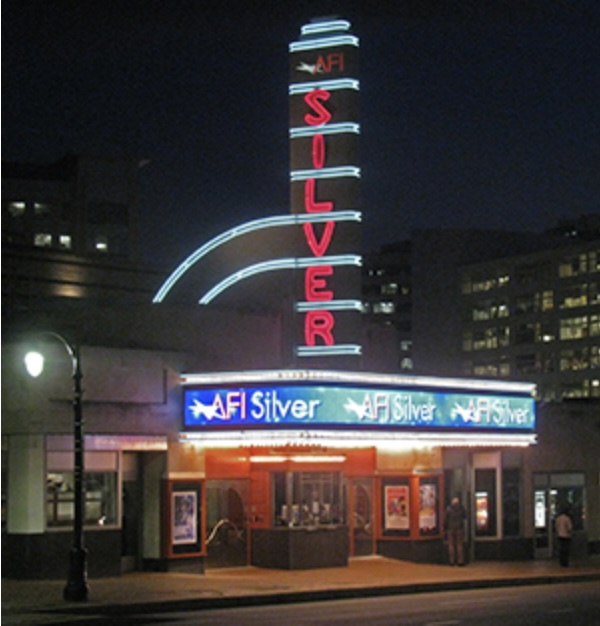
The new AFI Silver Theatre, with a nearly identical façade, welcomes everyone and features a great diversity of film festivals and screenings. Source: AFI Silver Theatre’s website

Now, as a major film buff, Dad was well aware that the American Film Institute had a very small theater inside the huge Kennedy Center. Perhaps, he thought, the AFI might wish to have a nearby Golden Age movie palace to showcase American and foreign films.

And so, in early 1993, he placed a phone call from M-NCPPC to AFI about his idea. When the citizens advisory committee on possible reuse of the Silver Theatre learned what the chairman—our dad—had done, they were furious with him; they had been pushing for a live-performance venue, not “another movie house.”

The AFI Silver Theatre and Cultural Center, the saved original theater and two additional screens, opened in April 2003.

For more information about current and upcoming films showing, see afisilver.afi.com.

Attainable Housing Strategies Initiative Educational Session

Above image from MoCo Planning Board’s Attainable Housing Strategies Initiative Final Report

The North Woodside Citizens Association is hosting an educational session for North Woodside residents about the proposed Attainable Housing Strategies Initiative from the Planning Board now being considered by the County Council.

When:   October 16, 2024
Time:     7:00-8:45 pm
Speakers:  Lisa Govoni, Housing Planner, Montgomery Planning Board

Agenda:  
7:00 – 7:40 Presentation
7:40-8:15   Questions for presenter
8:15-8:45   Community discussion

Moderator:   Ellen Kandell, NWCA President
Co-host:   Tony Byrne, NWCA Vice President

To request the zoom link, email the the moderator or co-host (click on links above).

A Season of Change & Light

Pat Tyson (Lyttonsville), Genevieve McDowell Owen (North Woodside), and Eva Santorini (Rosemary Hills) light a community Unity Lantern at the 2022 Talbot Avenue Bridge Lantern Walk. Photo by Jay Mallin

by Genevieve McDowell Owen

As the crisp air and falling leaves signal the arrival of autumn, our neighborhood is beginning to glow with the enchanting colors of the season. Fall and winter bring back beloved North Woodside traditions, both new and old, along with change.

The opening of the new Talbot Avenue Bridge is one of the changes coming. This important link between the North Woodside, Lyttonsville, and Rosemary Hills neighborhoods is scheduled to be finished and open to traffic around the new year. Residents will hopefully get a chance to walk the new bridge before that, though, during the upcoming Lantern Walk. I especially enjoy this newer
neighborhood tradition; walking and singing in the warmth of candlelight and community. Plus I enjoy the opportunity to talk with the local elected officials who typically attend.

The Lantern Walk, scheduled for November 11 at 5pm (rain date November 12), commemorates the historic Talbot Avenue Bridge and serves as a bridge of remembrance that connects our past and future. I encourage everyone to participate in this event, which not only honors the historical importance of the bridge but also fittingly takes place during Montgomery County’s Remembrance and Reconciliation month, a time to “remember the past and dedicate ourselves anew to the work of justice and reconciliation through action.”

Just across the bridge another change is in the works: a new Lyttonsville park*, situated just on the other side of the Purple Line tracks from North Woodside. This welcome addition promises to be a space where neighbors can come together, play, enjoy the outdoors, and see restored parts of the historic bridge. I also look forward this time of year to seeing neighbors new and old at one of our long-time traditions, the Holiday Tree and Menorah Lighting festivities. Keep an eye out for more details about these events coming up in December. In the meantime, happy Halloween!

Genevieve McDowell Owen is President of the North Woodside Citizens Association. This “Letter from the President” ran in the Fall 2023 issue of NWCA’s neighborhood newsletter, The Beacon.

*On September 7, 2023, the Montgomery County Planning Board voted to approve the design of the future neighborhood park in Lyttonsville, which, when completed, will be the closest park to many North Woodside residents. Pat Tyson, President of the Lyttonsville Civic Association, and Anna White, a NWCA board member, were among the many community members and groups who provided oral and written testimony in support of the park. It will feature a Bridge Memorial made from the historic Talbot Avenue Bridge’s steel girders. For more information, including NWCA’s written and oral testimony, click here.

NWCA Testimony in Support of Lyttonsville Park

On September 7, 2023, the Montgomery County Planning Board voted to approve the design of the future neighborhood park in Lyttonsville, which, when completed, will be the closest park to many North Woodside residents. Over 25 community members and groups, including the North Woodside Citizens Association, provided oral and written testimony in support of the park, which will feature a Bridge Memorial made from the historic Talbot Avenue Bridge’s steel girders. The historic bridge spanned the train tracks between Lyttonsville and North Woodside and was the only direct physical connection between our two communities for over a century, until its demolition in 2019.

Here is the joint letter that the Lyttonsville Civic Association, North Woodside Citizens Association, and Rosemary Hills Neighbors’ Association submitted as written testimony:

View a compilation of all the written testimony submitted here.

And here is the text of the oral testimony that Anna White, a NWCA board member, presented in person on behalf of the North Woodside Citizens Association (View video of oral testimony, which starts at 20:45; Lyttonsville Civic Association’s testimony begins at 49:25, and NWCA’s at 56:45):

The North Woodside Citizens Association would like to register its strong support for the facility plan—and full funding—of the future new neighborhood park in Lyttonsville.

Our neighborhood has not always been a welcoming place for residents of the historically African American community of Lyttonsville. Founded in 1890—almost 40 years after Lyttonsville was—and developed further in the 1920s, our neighborhood had racist deed covenants that prohibited Black people from owning property or living in it, except as domestic servants. The 1940s census found just 11 Black people residing in our census district, all domestic servants. Even after racist deed covenants were ruled unenforceable, their legacy continued in patterns of urban development and neighborhood demographics. And, as we all too sadly know, the racist beliefs at their root did not all-of-a-sudden disappear. As late as the early 1960s Black people were still being denied service at popular businesses in downtown Silver Spring, just a mile from our neighborhood. This is not long ago history. This is recent history—in the lifetime of some sitting in the room and watching online today.

Current and former residents of Lyttonsville have shared with us stories of racial bigotry they experienced within North Woodside over the course of their lives, as children and  as adults, and as late as the 1990s. When the historic Talbot Avenue Bridge fell into disrepair in the 1990s and North Woodside residents—and our association—advocated for its permanent closure to vehicles, some Lyttonsville residents perceived our efforts to be racially-motivated, something we learned 5 years ago when the short documentary film “The Bridge” was released. This is completely understandable in the context of local history and Lyttonsville residents’ lived experience of racial bigotry. And, it was hard for some of us in North Woodside to hear.

In recent years, our association has taken steps to explore, acknowledge and denounce our neighborhood’s role in past racial segregation, and to build with our Lyttonsville neighbors a foundation for a new chapter in the relationship of our communities, a new chapter rooted in mutual respect, friendship, unity, and love.

In September 2018 we unanimously passed a resolution to mark the occasion of the Talbot Avenue Bridge’s Centennial Celebration, which our then President publicly presented on the Bridge to the over 300 attendees.  In it we recognized the importance of the Talbot Avenue Bridge to Lyttonsville, formally acknowledged and denounced racial bigotry, in all its forms, past and present, and, in particular, racist deed covenants. We especially recognized that current and former residents of Lyttonsville had experienced racial bigotry in our neighborhood. And we resolved that by recognizing this past and embracing our neighbors on both sides of the bridge, it enables us to work towards building a stronger community for the future.

A few years later, in May 2021, we voted to add language to our association bylaws that we “acknowledge our neighborhood’s history of legal and de facto segregation and seek to make North Woodside a place for all people.”

It is in this same spirit that our neighborhood association strongly supports the creation of a neighborhood park in Lyttonsville, and the Bridge Memorial in particular, that will further help raise awareness of Lyttonsville history, which in many ways is intertwined with our own neighborhood’s history; facilitate cross-track socializing; and deepen the shared sense of community among neighbors—and neighborhoods—connected by the bridge.

Lyttonsville, North Woodside, and Rosemary Hills community members, Montgomery Parks staff, and Montgomery County Planning Board members pose together after the Montgomery Planning Board voted on September 7, 2023 to approve the future neighborhood park in Lyttonsville.

Letter from the President

Genevieve McDowell Owen

By Genevieve McDowell Owen, NWCA President

Personally, I’m not a fan of change. Snider’s, under the new ownership, still feels a bit weird to me every time I go in; I miss our neighborhood Staples even though Aldi replaced it some time ago; and I’m still adjusting, almost eight months later, to being an empty nester. Plus I can’t quite believe houses in North Woodside are now selling for a million dollars, some for over a million dollars. Maybe your house is worth that already. Wow. Can I mention that my husband and I bought our house in 2000 for $217,500? I don’t think our modest bungalow is worth $1,000,000 quite yet, but it’s now worth so much more now than I ever imagined it would be.

So change has already come to North Woodside. We are at the center (okay, technically bottom center) of a growing, affluent county bursting with new folks bringing innovation and eagerness to succeed right to our doorstep. But this boon is creating a big problem — lack of housing. It is one of the reasons our houses have increased so rapidly in value. Everyone wants to live in North Woodside. (And why wouldn’t they? It’s lovely, and close to shopping, good schools, and transportation.)

According to a recent Washington Post article, “(t)he supply shortage has grown so severe across the D.C. area that, in 2019, the Metropolitan Washington Council of Governments issued a sweeping call for local leaders to aggressively ramp up housing production. The association advised governments to approve a total of 320,000 homes by 2030, with a focus on affordably priced housing near jobs and transit.”

So Montgomery County has decided to embrace this population growth — it’s already proved to be a boon to our area, economically and culturally — and even plan for it. Because without a plan growth can cause problems, of course. It can strain services, increase commute times, worsen environmental conditions, and exacerbate inequality.

The plan, created by our Montgomery County Planning Board, is called Thrive Montgomery 2050 (Thrive). Maybe you’ve heard of it? It’s a 30-year blueprint for population growth in our county that also addresses environmental and climate concerns, transportation, open-land preservation, quality-of-life issues like walkability and public art, and the pressing need for racial equity and social justice. If you’re not familiar with it, check out the Thrive section on the montgomeryplanning.org website.

I was delighted to be part of the team of NWCA Board members that brought together lots of folks with different perspectives to discuss the housing and zoning aspects of Thrive, and what changes it might bring to our corner of the county, at a neighborhood forum back in March. After planners from the Planning Board presented a quick outline of Thrive, North Woodside residents asked excellent questions of the six panel members representing all sides of the issue.

I was even more delighted that the neighborhood survey on Thrive, sponsored by the NWCA Board, garnered a record-breaking response, with 111 neighbors representing 99 households participating (a nearly 40% increase in individual participation — and at least 25% by household — compared to the last survey we conducted in Fall 2019). The results of the survey, which are available on our website, showed that a majority of the neighbors who took the survey support the way the county proposes to plan for the future.

Thrive Montgomery 2050 is still under review, and won’t be voted on by the County Council for a few more months (so there’s still time to make your voice heard!), but even before a plan is put in place, I’m grateful to live in a county that is committed to creating a green, just, and inclusive way to deal with a future of growth and change. It makes thinking about the coming changes easier for me, including the addition of much-needed housing to our area. I hope it does for you, too.

The above letter ran in the Spring 2022 issue of the Beacon.

Neighborhood Forum on County Housing Issues

By Genevieve McDowell Owen, President

Have you ever wondered “so what, exactly, is a ‘zoning text amendment’ and how might it affect me?” Or maybe you saw some posts on the neighborhood listserv about Thrive Montgomery 2050 and would like a better understanding of what it means for our community. These and other questions will be answered at a Zoom forum on February 6 at 7 pm. The NWCA Board invites all neighbors to join us for this informative 90-minute virtual neighborhood meeting.

The meeting will start with a brief, factual presentation on current county housing issues and initiatives, tailored to address specific questions submitted by you and your neighbors,* by Montgomery County Planning Board Project Manager Khalid Afzal. Then the meeting will move on to a balanced panel discussion featuring knowledgeable local folks with different perspective on the issue who will answer more neighborhood questions. Scheduled to participate are local real estate expert Liz Brent, founder of Go Brent Realty; President of the Montgomery County Civic Federation Alan Bowser; the Maryland Advocacy Manager for the Coalition for Smarter Growth Jane Lyons; and longtime North Woodside resident Gus Bauman.

The link to the meeting will be posted on the listserv. Any neighborhood residents who wish to attend but don’t have access to the listserv, please contact the board’s President or Programs Coordinator.

Progress Continues Towards Improving the Georgia Avenue Corridor

By Geoff Gerhardt, Vice President

Following the Montgomery County Planning Board’s approval of the Forest Glen-Montgomery Hills Sector Plan in September, the County Council began the process of considering the plan. NWCA President David Cox and Vice President Geoff Gerhardt testified in support of the sector plan at a County Council hearing in November. Council committees are holding working sessions on the plan, and the full Council is scheduled to vote on it later this winter. Meanwhile, the State Highway Administration is making slow but steady progress on its plan for overhauling Georgia Avenue between 16th St. and Forest Glen Rd. Earlier this year, the state announced it had selected a version of the plan, known as Alternative 5B Modified.

This plan would bring wider sidewalks, protected bicycle track, and a landscaped median with dedicated left turn lanes to Georgia Ave. The plan would also make improvements to the Beltway interchange and eliminate the southbound “slip lane” at 16th St., creating a traditional “T” intersection instead.

The SHA plan is currently at the 30 percent design stage. This fall, the Federal Highway Administration gave preliminary approval to Alternative 5B Modified, which allows design and engineering efforts to move forward. Redesign plans for Georgia Ave. could be finalized by SHA by the end of this year.

However, much work remains to be done to secure construction funding for the project, which is estimated at $35–$40 million. In November, Geoff Gerhardt testified at a hearing of state senators and delegates representing Montgomery County in support of state funding for the project.

In addition, the Montgomery County Department of Transportation listed Georgia Ave. as its highest priority highway project in a draft letter to Maryland Department of Transportation. The final letter is scheduled to be sent to Maryland DOT this spring. Assuming it’s finalized, placement of Georgia Ave. at the top of the county’s transportation priorities list will be a huge victory—due in large part to letters and emails sent by residents of North Woodside. Thank you!