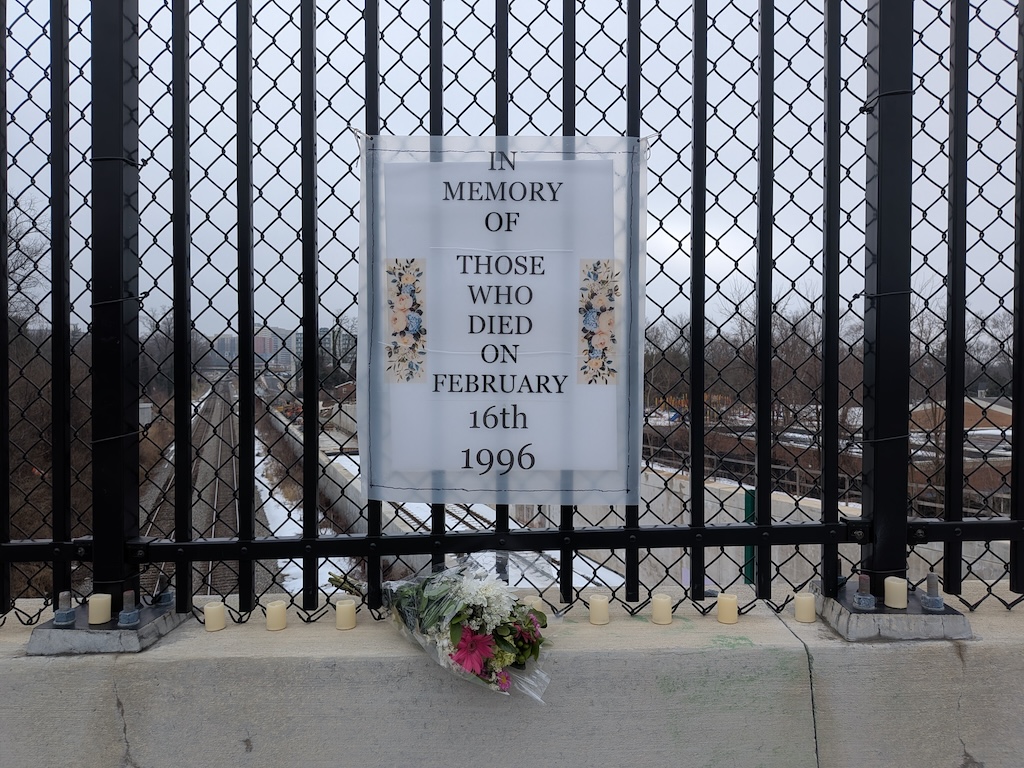
Today marks the 30th anniversary of the tragic MARC-Amtrak train crash just south of the Talbot Avenue Bridge. Eleven people perished in the crash, including three MARC crew members and eight passengers.
By Wendy and Lisa, daughters of Gus Bauman (North Woodside)
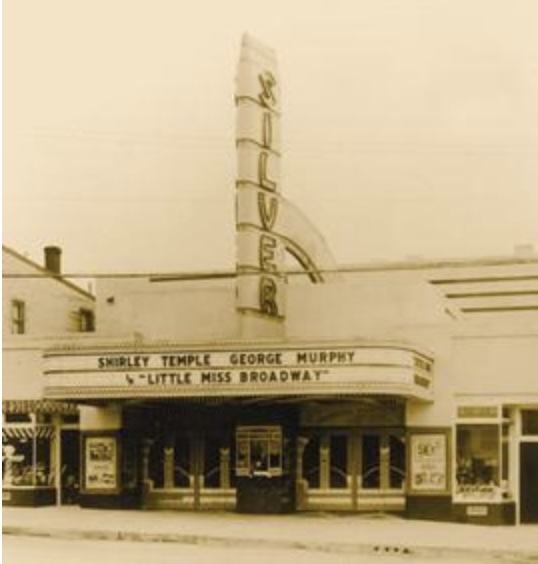
On Friday afternoon, August 24, 1984, when most Montgomery County officials were away on vacation, a contract developer quietly commenced demolition of the 1938 Art Deco Silver Theatre prior to a scheduled public hearing about designating it as an historic site.
The Silver Theatre in 1938, shortly after opening. Black people were not welcome for its first couple of decades. Source: M-NCPPC Historic Preservation office file
Because the county executive, councilmembers, county attorney, and planning board chairman were all out of town, our dad—an involved civic leader and prominent land use attorney—received frantic phone calls from county planners about what was happening at the Silver Theatre building.
On the following Monday, the county permitting department, under pressure from Dad and others, issued a stop-work order before the exterior destruction had managed to reach the theater’s unique interior.
Then, on June 15, 1989, following appointment by the county council (and threatened veto by the county executive), Dad took the oath of office as full-time Chairman of the Maryland-National Capital Park and Planning Commission/Montgomery County Planning Board. Under his leadership, following a decade of bitter struggles, including lawsuits, over what to do about the declining downtown Silver Spring, a new “Plan for the Revival of Downtown Silver Spring” was finally adopted by the county in April 1993. Among scores of action items, the plan recommended the shuttered, deteriorating Silver Theatre for historic designation and reuse as a performance venue. It was so designated the following February.
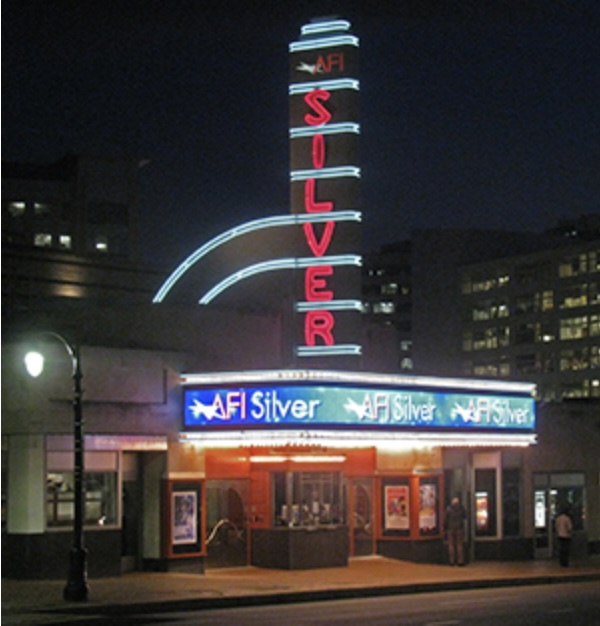
The new AFI Silver Theatre, with a nearly identical façade, welcomes everyone and features a great diversity of film festivals and screenings. Source: AFI Silver Theatre’s website
Now, as a major film buff, Dad was well aware that the American Film Institute had a very small theater inside the huge Kennedy Center. Perhaps, he thought, the AFI might wish to have a nearby Golden Age movie palace to showcase American and foreign films.
And so, in early 1993, he placed a phone call from M-NCPPC to AFI about his idea. When the citizens advisory committee on possible reuse of the Silver Theatre learned what the chairman—our dad—had done, they were furious with him; they had been pushing for a live-performance venue, not “another movie house.”
The AFI Silver Theatre and Cultural Center, the saved original theater and two additional screens, opened in April 2003.
For more information about current and upcoming films showing, see afisilver.afi.com.
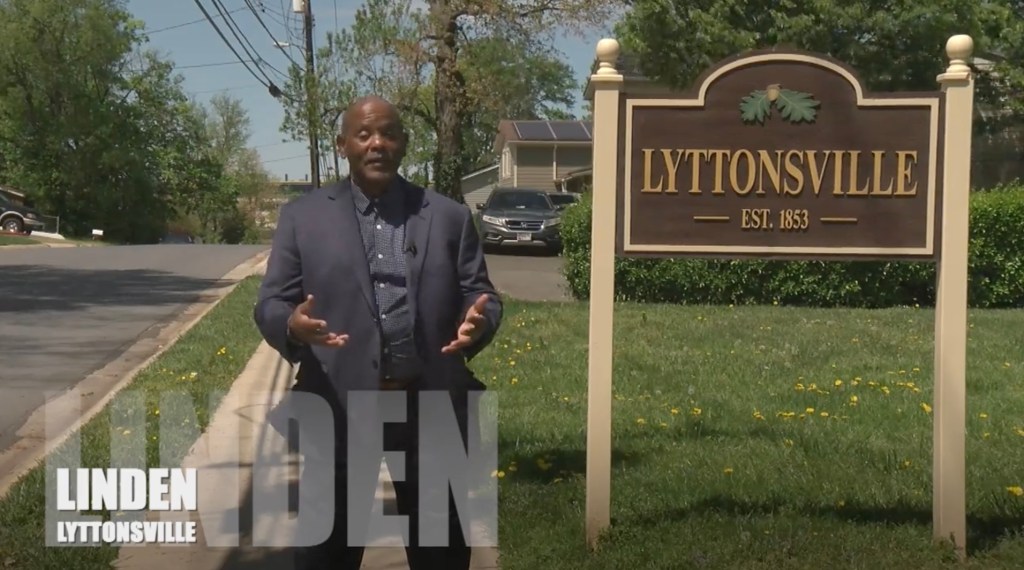
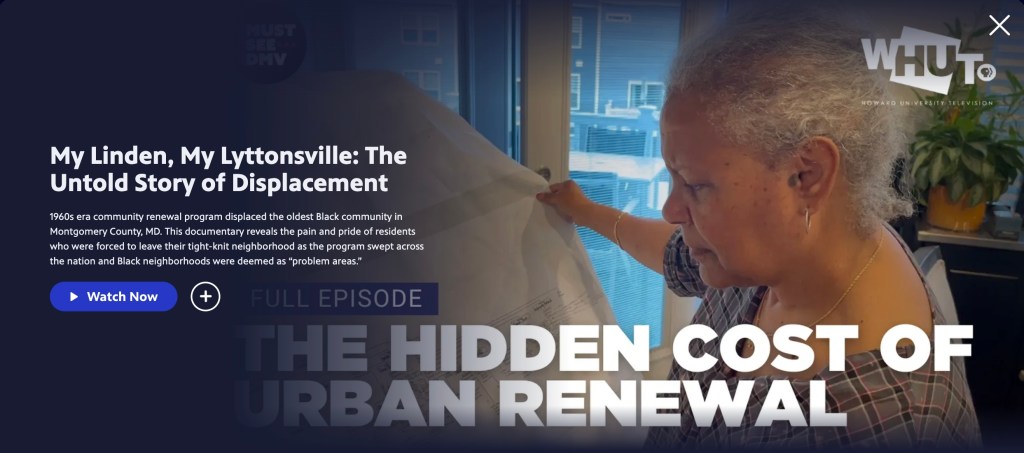
Former Lyttonsville/Linden resident and filmmaker Curtis Crutchfield introduces his 2024 documentary My Linden, My Lyttonsville: The Untold Story.
Celebrate Black History Month by learning more about local Black history!
Lyttonsville (aka Linden), a historically Black community established in 1853 by free laborer Samuel Lytton, is located just west of North Woodside. Train tracks run between the two communities, and the new Talbot Avenue Bridge connects them.
Now airing and streaming on public television is an hour-long documentary by former Lyttonsville/Linden resident Curtis Crutchfield about the history of the community he grew up in:
My Linden, My Lyttonsville: The Untold Story of Displacement 1960s era community renewal program displaced [one of] the oldest Black community in Montgomery County, MD. This documentary reveals the pain and pride of residents who were forced to leave their tight-knit neighborhood as the program swept across the nation and Black neighborhoods were deemed “problem areas.”
The film features interviews with over two dozen current and former community residents and others, and draws parallels between the experience of living in Lyttonsville/Linden and in other small Black communities in Montgomery County, such as Scotland and Emory Grove.
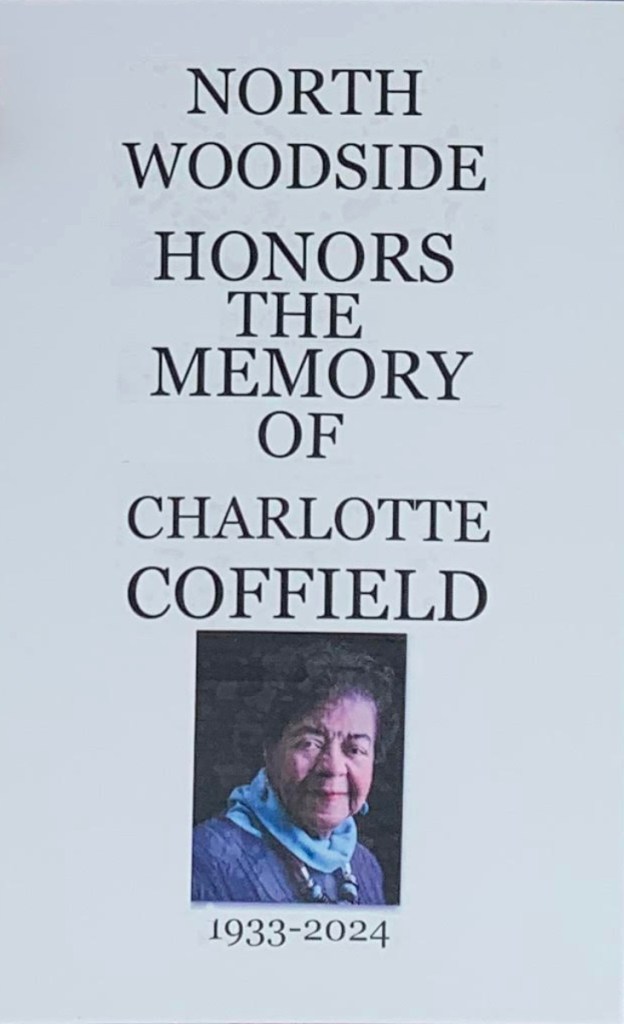
Sign held by North Woodside residents in honor of Charlotte Coffield on September 24, 2024, as her funeral procession crossed the new Talbot Avenue Bridge into North Woodside
The new Talbot Avenue Bridge remains an active construction zone. The bridge is not currently completed, nor open to pedestrians and cars, and will not be so by the date of the Lantern Walk. The Purple Line team has confirmed that Lantern Walk participants may cross the bridge within a designated area and limited time frame, in order to access and participate in the event. Participants may cross, but NOT hang out and linger on the bridge. Please be respectful of these guidelines. After the community reception at Rosemary Hills ES has concluded and the lights on the bridge have been turned off, anyone entering the construction site will be considered trespassing. Please review the full safety guidelines on the Lantern Walk webpage and visit it for any last-minute updates.
Special this year: New route, new bridge, and the first time the community will have an opportunity to cross this historic space in 4 1/2 years! In observance of Montgomery County’s “Remembrance and Reconciliation Month,” be part of marking the beginning of a new chapter in the relationship of the communities connected by the bridge. Many special guests will be joining us, including members of Washington Revels’ Jubilee Voices.
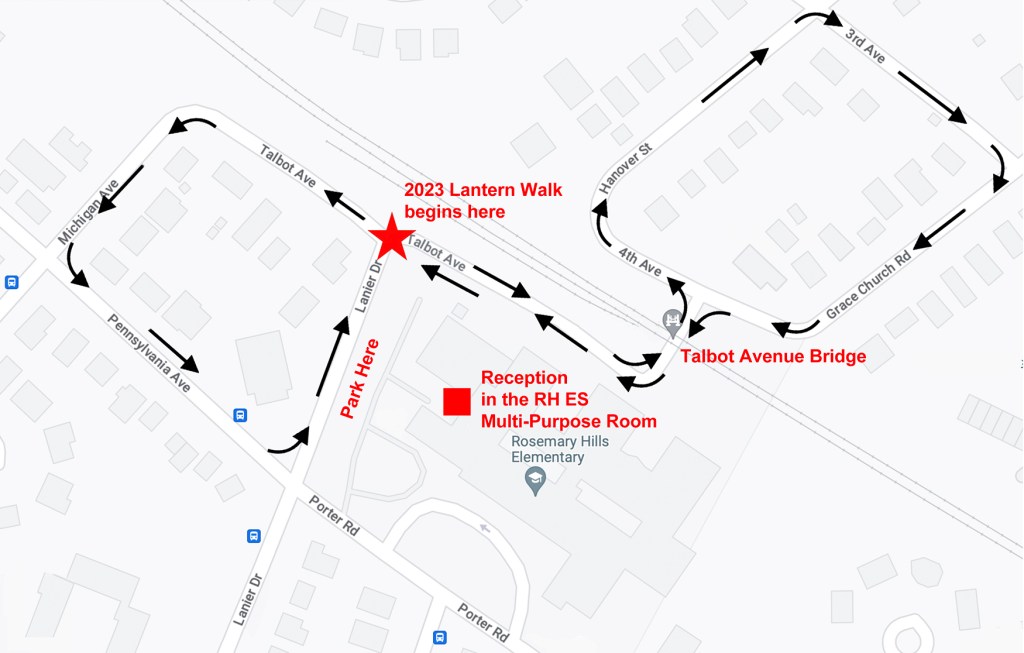
WHEN: Saturday, November 11, 2023 at 5:00p Gather: 5:00 – 5:15 pm Short Program & Lantern Walk: 5:15 – 6:00 pm Community Reception: 6:00 – 7:30 pm
WHERE: Intersection of Talbot Ave. & Lanier Dr. (Lyttonsville) The route will start and end at the same place, crossing over the new Talbot Avenue Bridge twice and going around the two blocksclosest to it, one in North Woodside and one in Lyttonsville.* (scroll down to view map) BRING: Warm clothing and good walking shoes, and a lantern (and a bell to ring, if you have one) Note: Any type of lantern will do, from a tea light candle in a glass jar to something more elaborate, either handmade or store-bought. You can find many ideas online: bit.ly/HomemadeLanterns. If you have the time and energy, we encourage you to get creative! Extra lanterns and tea light candles will be available for those who need them.
* The Lantern Walk will conclude with an indoor community reception at Rosemary Hills Elementary School. All participants are invited to join us for refreshments, music, and warm mingling! The reception will be held in the school’s all-purpose room, which is accessible from the Lanier Dr. side of the school, right next to where the Lantern Walk will start and end.
Event organized by the Talbot Avenue Bridge Committee and co-sponsored by the Lyttonsville Civic Association, North Woodside Citizens Association, and Rosemary Hills Neighbors Association
On September 7, 2023, the Montgomery County Planning Board voted to approve the design of the future neighborhood park in Lyttonsville, which, when completed, will be the closest park to many North Woodside residents. Over 25 community members and groups, including the North Woodside Citizens Association, provided oral and written testimony in support of the park, which will feature a Bridge Memorial made from the historic Talbot Avenue Bridge’s steel girders. The historic bridge spanned the train tracks between Lyttonsville and North Woodside and was the only direct physical connection between our two communities for over a century, until its demolition in 2019.
Here is the joint letter that the Lyttonsville Civic Association, North Woodside Citizens Association, and Rosemary Hills Neighbors’ Association submitted as written testimony:
View a compilation of all the written testimony submitted here.
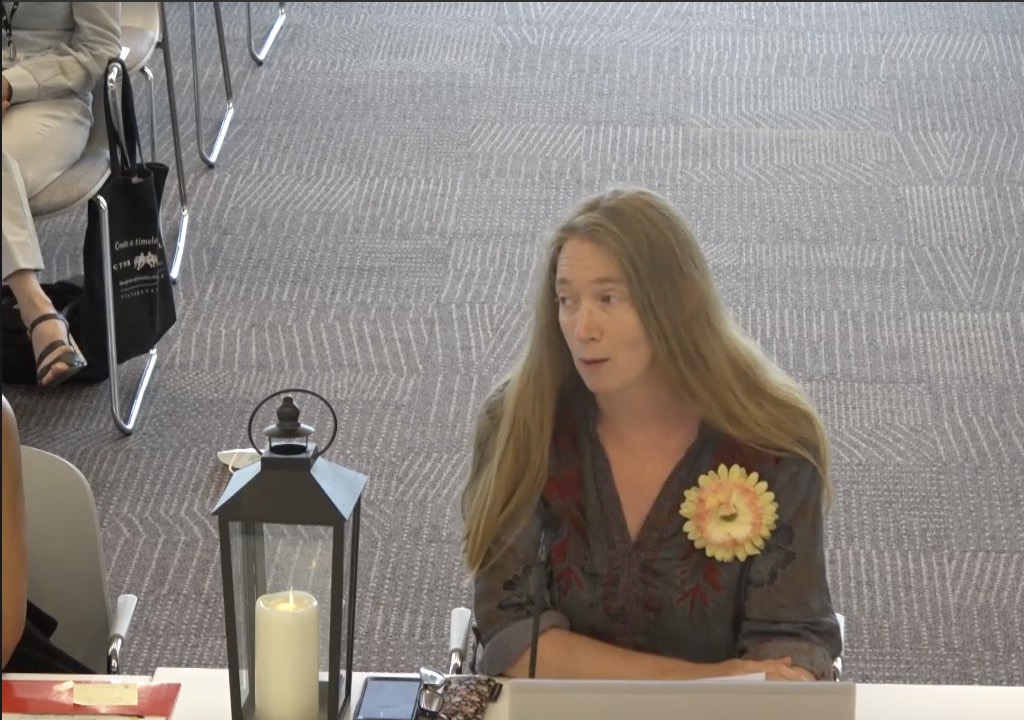
And here is the text of the oral testimony that Anna White, a NWCA board member, presented in person on behalf of the North Woodside Citizens Association (View video of oral testimony, which starts at 20:45; Lyttonsville Civic Association’s testimony begins at 49:25, and NWCA’s at 56:45):
The North Woodside Citizens Association would like to register its strong support for the facility plan—and full funding—of the future new neighborhood park in Lyttonsville.
Our neighborhood has not always been a welcoming place for residents of the historically African American community of Lyttonsville. Founded in 1890—almost 40 years after Lyttonsville was—and developed further in the 1920s, our neighborhood had racist deed covenants that prohibited Black people from owning property or living in it, except as domestic servants. The 1940s census found just 11 Black people residing in our census district, all domestic servants. Even after racist deed covenants were ruled unenforceable, their legacy continued in patterns of urban development and neighborhood demographics. And, as we all too sadly know, the racist beliefs at their root did not all-of-a-sudden disappear. As late as the early 1960s Black people were still being denied service at popular businesses in downtown Silver Spring, just a mile from our neighborhood. This is not long ago history. This is recent history—in the lifetime of some sitting in the room and watching online today.
Current and former residents of Lyttonsville have shared with us stories of racial bigotry they experienced within North Woodside over the course of their lives, as children and as adults, and as late as the 1990s. When the historic Talbot Avenue Bridge fell into disrepair in the 1990s and North Woodside residents—and our association—advocated for its permanent closure to vehicles, some Lyttonsville residents perceived our efforts to be racially-motivated, something we learned 5 years ago when the short documentary film “The Bridge” was released. This is completely understandable in the context of local history and Lyttonsville residents’ lived experience of racial bigotry. And, it was hard for some of us in North Woodside to hear.
In recent years, our association has taken steps to explore, acknowledge and denounce our neighborhood’s role in past racial segregation, and to build with our Lyttonsville neighbors a foundation for a new chapter in the relationship of our communities, a new chapter rooted in mutual respect, friendship, unity, and love.
In September 2018 we unanimously passed a resolution to mark the occasion of the Talbot Avenue Bridge’s Centennial Celebration, which our then President publicly presented on the Bridge to the over 300 attendees. In it we recognized the importance of the Talbot Avenue Bridge to Lyttonsville, formally acknowledged and denounced racial bigotry, in all its forms, past and present, and, in particular, racist deed covenants. We especially recognized that current and former residents of Lyttonsville had experienced racial bigotry in our neighborhood. And we resolved that by recognizing this past and embracing our neighbors on both sides of the bridge, it enables us to work towards building a stronger community for the future.
A few years later, in May 2021, we voted to add language to our association bylaws that we “acknowledge our neighborhood’s history of legal and de facto segregation and seek to make North Woodside a place for all people.”
It is in this same spirit that our neighborhood association strongly supports the creation of a neighborhood park in Lyttonsville, and the Bridge Memorial in particular, that will further help raise awareness of Lyttonsville history, which in many ways is intertwined with our own neighborhood’s history; facilitate cross-track socializing; and deepen the shared sense of community among neighbors—and neighborhoods—connected by the bridge.
Lyttonsville, North Woodside, and Rosemary Hills community members, Montgomery Parks staff, and Montgomery County Planning Board members pose together after the Montgomery Planning Board voted on September 7, 2023 to approve the future neighborhood park in Lyttonsville.
On March 30, 2023, Montgomery Parks held a community meeting to unveil the revised design concept for the future Lyttonsville Neighborhood Park, featuring a Bridge Memorial constructed from the girders of the historic Talbot Avenue Bridge (1918–2019). The bridge served as a connection between the once racially segregated communities of Lyttonsville and North Woodside. Last fall, local civic groups, including the North Woodside Citizens Association, sent a letter to Montgomery Parks advocating to incorporate the girders in a way that re-creates a sense of the bridge. For more information about the future park, including many more images of the design concept, visit the park’s website.
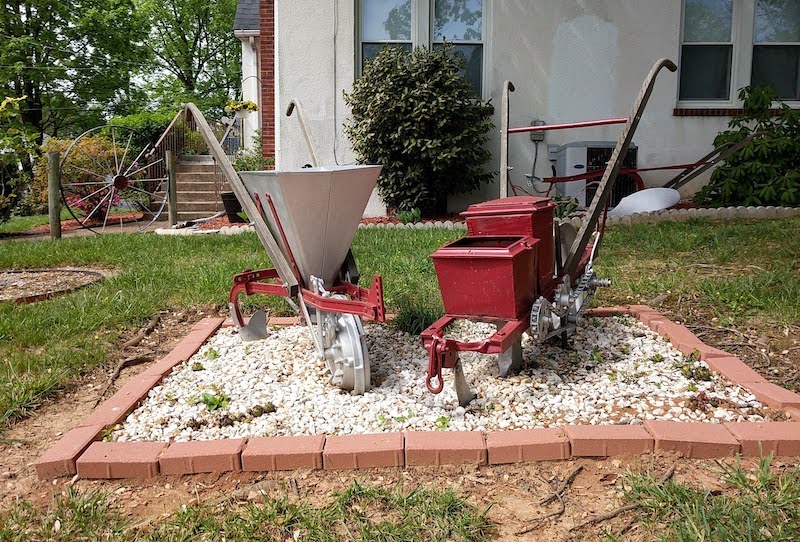
Most people zip past the intersection of Glen Ross Rd. and 2nd Ave., but there’s good reason to slow down and take notice of some interesting objects at the house on the northwest corner. Nancy Hope, who lives here with her husband, Ben, and their three daughters, grew up in that house.
On the lawn you’ll see farm implements, including a traditional plow, a horse-drawn corn planter, a fertilizer plow, a seeder, and a well pump, as well as wagon wheels and a windmill. (More about the latter below.) Nancy’s grandfather used them on the family farm in Pound, Virginia. Her dad, Grover Helton, brought them from the farm in the late 1970s after his father passed away.
During World War II, Grover served as an army medic. After moving to Silver Spring, he worked at Carriage Hill Nursing Home (now Regency Care of Silver Spring) on 2nd Ave. His wife, Charlotte, was also a nurse there, and they bought the house on Glen Ross to live close to their work.
Sadly, as is often the experience of immigrants and people considered “others,” Nancy’s family encountered hostility from neighbors who did not like the farm implements. They made unkind comments and left notes that “hillbillies should go back to the hills.” Had those neighbors gotten to know the Heltons, they would have discovered that Grover was a jazz-loving decorated WWII veteran. Although deeply hurt, the Helton family grew emboldened.
Nancy’s mother kept the notes as a reminder of the family’s “no-BS attitude:” Stand up for yourself, and remember that no one can tell you who you are—or what you can do. In defiance, her father added the windmill and wagon wheels as borders for flower beds.
Over the years, Ben has restored the farm implements, which he carefully and continually maintains. More than unique lawn décor, they represent a piece of family history that Nancy, Ben, and their children appreciate to this day.
Begun in 2018, the Talbot Avenue Bridge Lantern Walk is an annual local community event that weaves together neighborhoods once divided by racial segregation. All are welcome! Come join us in shining our lights in the darkness, promoting unity over division, remembering the past and taking steps toward a brighter future…
WHEN: Saturday, November 12, 2022* Gather by 5:15pm,Lantern Walk will commence soon after
WHERE: 4th Avenue and Hanover Street (North Woodside) to Talbot Avenue (Lyttonsville), via Brookville Road View Route
See below for three different ways to participate
BRING: Warm clothing, a lantern, and a bell to ring, if you have one
Note: Any type of lantern will do, from a tea light candle in a glass jar to something more elaborate, either handmade or store-bought. You can find many ideas online: bit.ly/HomemadeLanterns. If you have the time and energy, we encourage you to get creative! Extra lanterns and tea light candles will be available for anyone who needs them.
* Rain date: Sunday, November 13, 2022 (any event updates will be posted to bit.ly/TABLanternWalk)
Ways to Participate
Residents of Lyttonsville, North Woodside, and Rosemary Hills are invited to participate in one of three ways:
1) Join for the whole lantern walk. As the route is not a loop, residents of North Woodside will need to walk back or have someone pick you up in Lyttonsville.
2) Join for a portion of the lantern walk. For example, residents of North Woodside can join for the portion that goes through the neighborhood (e.g. 4th Ave -> Warren St/A Wider Circle).
3) Watch the lantern walk pass by. Neighbors who live along the route can come out of their homes to watch, wave, and hold a candle or lantern of their own in solidarity. Neighbors who live elsewhere can come stand along the lantern walk route and do the same.
Safety Precautions
Any young children who participate should be closely supervised by adults. And organizers encourage participants to RSVP ahead of time at bit.ly/TABLanternWalk, so they have a good sense of expected numbers and can adjust safety precautions accordingly.
Check out videos of past Talbot Avenue Bridge Lantern Walks:
1st Talbot Avenue Bridge Lantern Walk (2018). Video by David Rotenstein
4th Talbot Avenue Bridge Lantern Walk (2021). Video by Jay Mallin
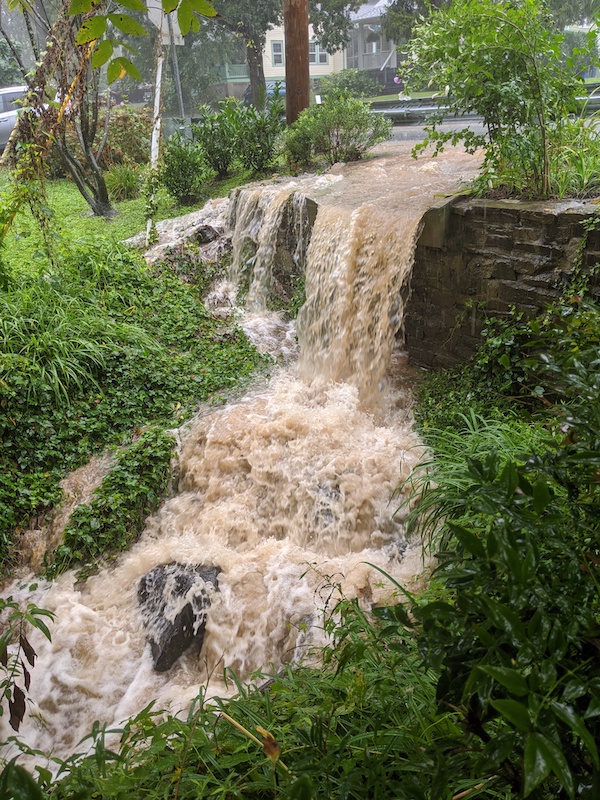
Sights to See: Natural Wonders, e.g. “The Niagara of North Woodside,” viewable whenever the sky really unleashes.
Want to know where some famous people grew up? Which house still has an old horse hitch and well in back? Where the hidden stream flows? Where to find some delicious guava, mango, or soursop ice cream on a hot and sultry day?
Discover the humble wonders of our very own neighborhood in The Staycationer’s Guide to North Woodside. Written and organized like a tourist guide book—Sights to See (Natural Wonders, Historical Sites, Botanical Gardens), Things to Do, Where to Eat, and How to Get Around—the guide’s 27 pages contain almost 60 things* to see and do around the neighborhood—something for all ages and staycation inclinations!
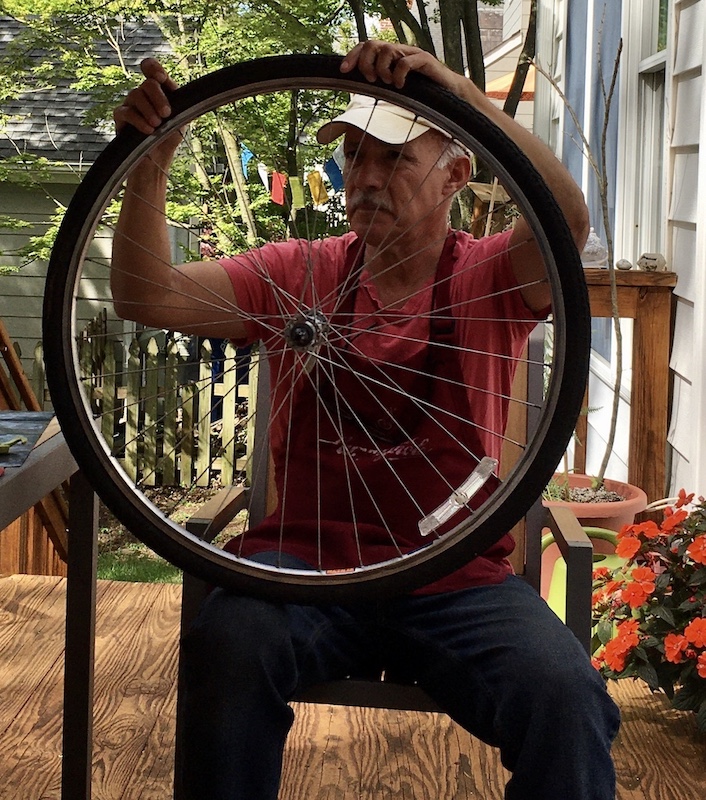
How to Get Around: By bike! Need a tune up? Contact Freewheeling Bike Tune-Ups, a free service of North Woodside resident Manuel Vera.
The guide was a fun little summer pandemic project a couple years ago for North Woodside resident Anna White. This summer it may be of particular interest to any new neighbors wishing to get to know their new home better, anyone who’s had their vacation plans scuttled by airline cancellations or Covid, and parents and caregivers of young children looking for ideas for simple, fun, and creative activities to pass away downtime.
North Woodside residents and NWCA members who are subscribed to the neighborhood listserv can access the guide in the listserv’s online file section (Click on the “Fun” folder). A digital or hard copy can also be requested by sending an email to the NWCA Communications Coordinator.
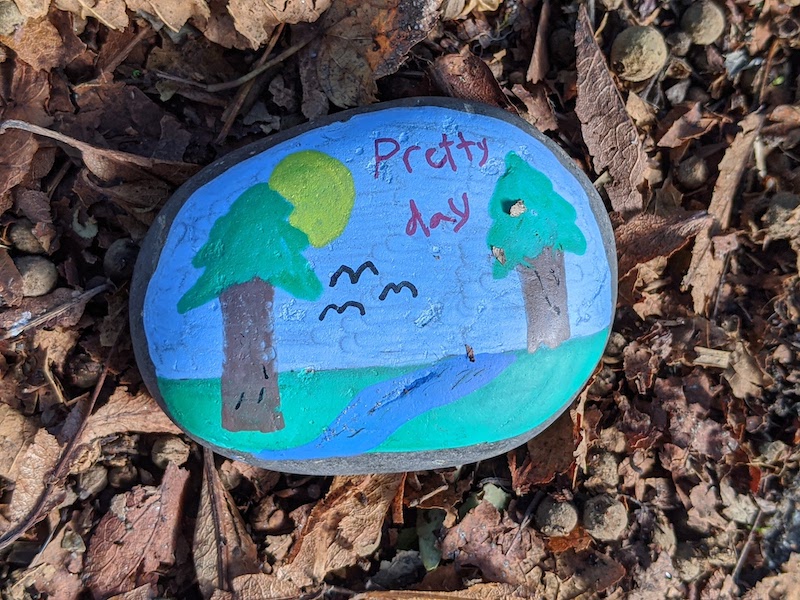
Enjoy the Local Art Scene: Check out the painted stones around the neighborhood!
Thanks again to all the neighbors who provided information for the guide! If after skimming through it you’d like to suggest additional North Woodside-related history, places, things, or activities to include in an updated version, please do!
For a few more things to do and see listed in The Staycationer’s Guide to North Woodside, see below.
* Note: A few listings in the guide are now out-of-date. Likewise, there are a number of brand new neighborhood sights to see and things to do that are not listedand may be included in a future revised version.
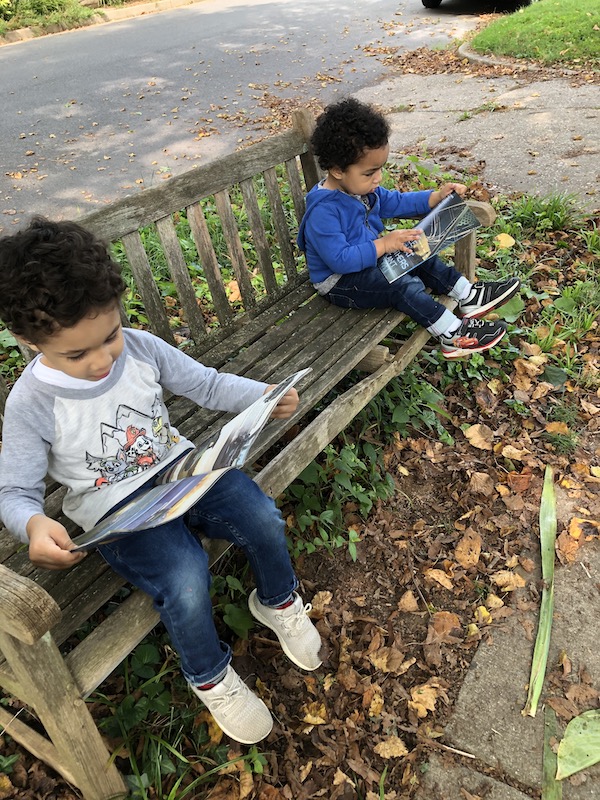
Things to Do: Peruse Used Books. Visit one of the four little libraries in North Woodside. Above: Children read books found in the Philip F. Welsh Memorial Library.Participate in the Local Art Scene: Color in a North Woodside Coloring Page. Neighborhood resident Barry Galef created one for each of 12 neighborhood scavenger hunts that took place Spring 2020. The one above was for the Scavenger Hunt #1 (One-of-a-Kind Decorations).
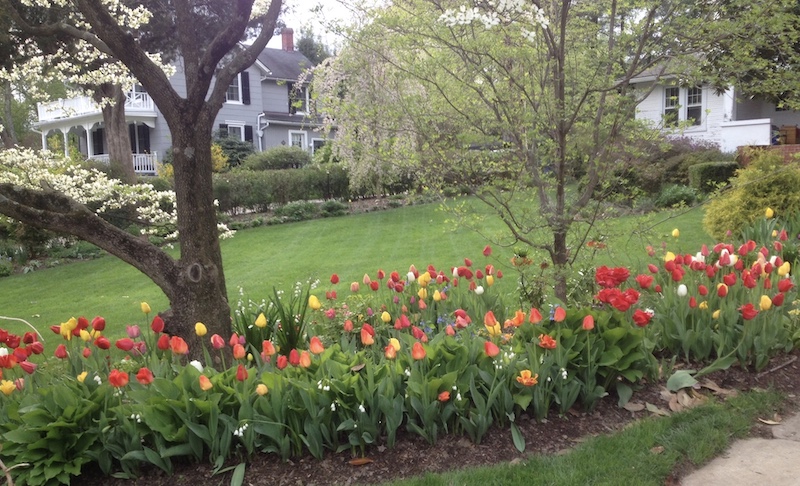
Sights to See: Historical Sites, e.g. Houses That Mirror the History of Residential Architecture. Can you find the above Sears Kit House?Sights to See: Botanical Gardens. There are many small and beautiful gardens to be found in North Woodside through the seasons.Places to Eat: Tropics Ice Cream. The best tropical ice cream around!






 Welcome to North Woodside